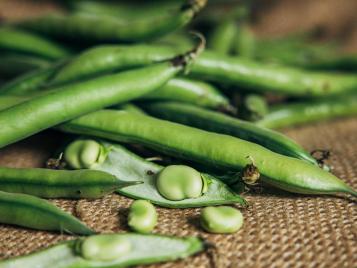
When to grow broad beans (Vicia faba)
Broad beans are one of the first, and one of the last, vegetables that can be planted in the growing year. February and November are the ideal months and if you plant in both periods, you can expect to harvest from May all the way through to September.
Spring planting: sow February - April, harvest June - September
Autumn planting: sow October - November, harvest May - September
When planting in late Autumn or early Spring, make a note to protect the plants with cloches or fleeces when frost is about.
Types of broad bean
Whilst you can buy young broad bean plants to cultivate, you can easily grow broad beans from seed. There are three types to choose from:
- Longpod
- Windsor
- Dwarf
Windsor
Arguably the Windors produce the most flavourful beans, and like all good things they take a little longer to develop. Windsors are not particularly hardy and so this type is not recommended for Autumn sowing. Windsor crops are not as bountiful as the Longpods as each pod only carries 4 or 5 beans.
Dwarf
Dwarf beans tend to be bushy with short pods and are ideal for small plots of land or for growing in containers. Dwarf broad bean varieties are also ideal for growing in exposed sites and with the use of cloches. Dwarf plants reach a height of about 30cm and have a yield of 4 or 5 beans in each pod.
Longpod
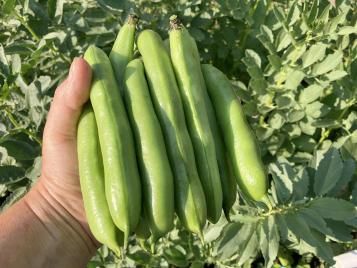
The Longpod is the most common variety of broad bean and has long, slender pods (hence the name). This type of broad bean is usually heavy cropping with each pod containing around 10 beans. Longpod is the largest type and the plants can reach heights of over 2 metres and so need supporting.
Growing broad beans from seed
Growing broad beans from seed is relatively straight forward and they can be sown directly into the ground. If sowing in February it may be an idea to help warm the ground with a cloche until germination has occurred.
Sowing broad beans indoors
To give your broad bean seeds the best start you might want to sow them indoors in a propagator. Alternatively and as broad beans produce long roots, you could try germinating them in used toilet rolls!
Fill the cardboard roll with plenty of damp (but not wet) compost, making it quite compact, pop the seed into the top and cover with a layer of compost and place somewhere warmish. Take care not to water too much otherwise, the cardboard will go soggy and collapse before the seeds have germinated. The seeds should germinate in a few days. You will need to harden off the seedlings before planting out, leaving about 20cm between each seedling.
Sowing broad beans outdoors
Broad bean seeds can be sown directly into the ground, or containers outside and are very straightforward. Choose a well-drained, sheltered and sunny site. Dig the ground well before sowing any seeds and improve the soil by either add some manure or some leaf mould, or a light dressing of a general granular plant food. Sow in staggered rows with one bean seed placed about 5cm deep and 20-25cm apart. Water remember to protect the ground if frost is still about.