How to Identify & Get Rid of Clover Weeds
Clover is often seen in gardens in Australia, and is commonly regarded as a weed, as it appears where it is not wanted. It is a nuisance in lawns and can spread to flowerbeds. It is beneficial to pollinators, but here we look at how to manage clover when it becomes a problem in the garden.
A single clover plant can spread to up to a metre wide, covering a very large area with a mat of creeping stems. The plants can put down more roots wherever the stem touches the ground, creating a dense and perennial green ground cover which can be hard to kill off.
Clover will withstand heavy and repeated cutting or grazing, as well as poor conditions, making it a persistent and tough weed. Unfortunately, these robust qualities mean that it is deliberately added to some commercial grass seed mixes, where it can help to establish a lawn in a challenging environment. Clover can also present as a weed when introduced to the garden from pots of other plants, wind, birds, or from existing clover plants nearby.
The presence of clover weed in a lawn is an important indicator of the health of the grass. Like other plants in the pea family, clover thrives in soil that has low levels of nitrogen, so it can point to an imbalance of nutrients in the lawn.
How to identify clover
Clover is a perennial, presenting itself all year round as a dense, low-growing mat of foliage.
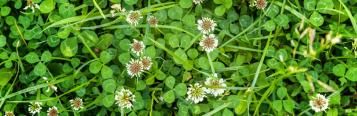
The botanical name for the genus clover, Trifolium spp., provides a useful clue as to how to identify it. ‘Tri’ derives from the Latin ‘tres’, meaning three, and ‘folium’ from ‘leaf’. So, as you might expect, clover weeds usually have three lobed leaves. These lobes are actually called ‘leaflets’. Exceptionally, four-leaf clovers are discovered, but these are rare and so count yourself very lucky if you find one!
On close inspection, the edge of each leaflet is lightly serrated, and there is an easy to see vein along the middle which can be traced back to the stem. There is also often a pale green or white flattened ‘v’ shape on the surface of the leaflet.
Clover weed generally flowers from winter through to the summer. The flower stalks are upright, and the flower heads are densely formed. The flowers are white, pale pink, red, yellow, or purple.
Types of clover plants
There are over 300 known types of clover, also known as trefoil. The most common ones found in Australia are:
White clover (Trifolium repens)
White clover is the most common lawn clover. It produces white to creamy-pink flower heads and spreads rapidly via creeping stems (stolons) that grow along the soil surface and root wherever they touch the ground. It thrives in lawns with gaps or low nitrogen and can quickly form dense patches.
Red clover (Trifolium pratense)
Red clover is a taller, upright plant with purple-red flower heads that can reach around 3cm across. It can grow up to 50cm tall and has a strong tap root. It's less common in closely mown lawns and is more often found in garden beds, open areas, or poorly maintained turf.
Strawberry clover (Trifolium fragiferum)
Strawberry clover produces small pink flowers that develop into distinctive, rounded seed heads resembling a strawberry or raspberry. It tends to grow in moist or poorly drained areas and can spread in lawns with consistent moisture.
Suckling clover (Trifolium dubium)
Also known as shamrock or lesser trefoil, this is a small cool-season annual clover with tiny yellow flowers and rounded leaflets. It has a slender tap root, germinates in autumn and flowers from spring into early summer, and often appears in thin or stressed lawns.
Burr medic (bur clover) (Medicago polymorpha)
Often mistaken for clover, burr medic produces small yellow flowers followed by spiky, coiled seed pods (burrs).These burrs can stick to clothing and pets, making it a nuisance in lawns and garden areas.
Sweet clover (Melilotus species)
Sweet clover is a tall-growing plant that can exceed one metre in height. It has a long tap root and produces yellow or white flowers. It's more commonly found in open or disturbed areas rather than maintained lawns.
Bird’s foot trefoil (Lotus corniculatus)
This clover relative has five narrow leaflets and produces yellow flowers, sometimes with orange markings. It's not an Australian native, though it's often found in low-maintenance lawns and roadsides.
Clover vs Oxalis: what’s the difference?
Clover is often confused with Oxalis because both have three-part leaves, but there is a key difference:
- Clover leaflets are rounded or oval, often with a pale chevron marking, and flowers are rounded and clustered
- Oxalis leaflets are heart-shaped, and flowers have five distinct petals and are usually bright yellow
Correct identification is important, as control methods can differ.
How does clover weed affect your lawn?
Clover weed displaces lawn grass as it competes with it, suffocating grass and taking nutrients and water. Uncontrolled, the weed will spread further over lawned areas, taking advantage of weakening grass.
These broadleaved weeds can shoot up flower heads that are out of keeping with an immaculate lawn sward.
Research also suggests that clover can host the destructive red legged earth mite and light brown apple moth. The burrs or prickles produced by Medicago polymorpha, can cling to and irritate pets (as well as helping to spread the weed further).
How to get rid of lawn clover
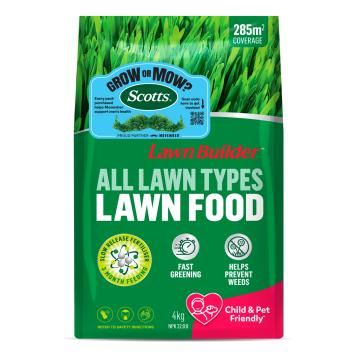
The first thing to consider if you find clover in your lawn, is whether there is an imbalance of nutrients in the soil. Clover can indicate that there is not enough nitrogen, which means that the grass cannot thrive to its full potential. If you suspect this might be the case, apply a lawn fertiliser which is high in nitrogen, such as Scotts Lawn Builder™ All Lawn Types Lawn Food.
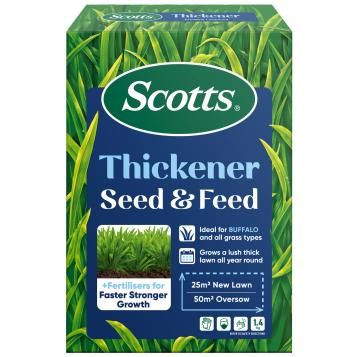
Clover is an opportunistic weed which will take root in bare patches of lawn. To get ride of clover weed, reduce the space available for it to do this by using a product like Scotts Lawn Builder™ Lawn Thickener Lawn Seed to encourage thick, healthy grass.
A lawn weedkiller can control most clover species, including white and red clover. Buffalo, kikuyu and other lawn types can be damaged by an unsuitable weedkiller, so choose a selective herbicide, such as Scotts Lawn Builder Buffalo Weed, Feed & Green Up Refillable Bottle, that is suitable for your lawn type. Always follow the label directions.
Mow Lotus corniculatus before it flowers and has a chance to produce seed. Hand-weeding this species is difficult, as often the plant will break before the entire root can be removed, so it will simply regrow. A selective weedkiller can be useful.
Trifolium dubium and Medicago polymorpha respond better to an organic approach rather than weedkiller. Rake Trifolium dubnium to pull the plants into an upright position, and then mow. Remove the shallow rooted Medicago polymorpha by hand, but do not compost them, as the burrs and prickles will germinate to produce new plants.
Whichever approach to killing clover weed is taken, try to do it after the winter, when plants are putting on new growth.
Clover can hugely benefit the garden by attracting pollinators, especially bumblebees and honeybees. It is a very important source of nectar to them, so only control it if it really has become a nuisance weed. Clovers can be hand weeded, using a grubber or small knife, where individual plants appear in flowers borders. If it is not causing an obvious problem in the flower bed, leave it for wildlife.
Different methods of killing clover
There are several effective ways to control clover, depending on the size of the infestation and your preferred approach.
Hand removal
For small patches, manually removing clover is effective. Loosen the soil and remove the entire root system to prevent regrowth.
Spraying clover
Spraying with a selective herbicide is the most effective method for larger infestations. Apply during active growth (spring or autumn) for best results. To help prevent clover returning, feed regularly with a Scotts Lawn Builder™ lawn food - clover thrives in low-nitrogen lawns, and a well-fed lawn crowds it out.
Natural treatments
Natural options include boiling water or vinegar-based sprays, but these are for hard surfaces or small isolated weeds only - they'll kill grass too, so don't use them on lawn.
Best clover killer for different types of lawn
The best clover killer depends on your lawn type, as some grasses, especially buffalo, are sensitive to certain herbicides. Using the right product ensures effective weed control without damaging your lawn.
Best clover killer for Buffalo lawn
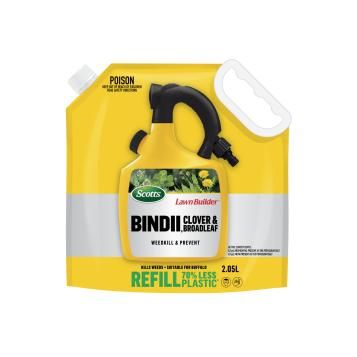
Buffalo lawns require a selective herbicide that is specifically labelled safe for buffalo grass. A product like Scotts Lawn Builder Bindii Weedkiller Refillable Bottle is a reliable option, as it targets clover and other broadleaf weeds while being suitable for use on buffalo lawns when applied as directed. Avoid non-selective or harsher herbicides, as these can damage or kill buffalo grass.
Best clover killer for Kikuyu lawn
Kikuyu is more tolerant than buffalo, so you can use a selective broadleaf weedkiller to target clover effectively. Products designed for general lawn use will usually be suitable, provided they are applied at the correct rate. For convenience, Scotts Lawn Builder™ +Weedkill Slow Release Lawn Fertiliser can also be used to control clover while improving overall lawn health - note this is not suitable for buffalo lawns.
Best clover killer for Couch lawns
Couch lawns respond well to most selective broadleaf herbicides, making clover relatively easy to control. Choose a product that targets broadleaf weeds and apply during active growth for best results. As with Kikuyu, weed-and-feed options can be useful for maintaining a dense, healthy lawn that resists future clover growth.
Best clover killer for mixed or general lawns
For mixed lawns, the safest approach is to use a broadleaf weedkiller suitable for multiple lawn types. Scotts Lawn Builder Weed, Feed & Green Up Refillable Bottle (hose-on) is a good general option, but it's not suitable for buffalo lawns. For buffalo, use Scotts Lawn Builder Buffalo Weed, Feed & Green Up instead, and always check the label for your buffalo variety.
Always check the label to confirm compatibility with your specific lawn mix before applying.
How to prevent clover weeds on lawn
Good lawn maintenance will help to keep the grass in optimum health and prevent the growth of clover.
Mow regularly to remove flowers before they are able to set seed. Rake the lawn first to bring up stems and stolons which the mower can then cut. If the clover has flowered recently, make sure to collect the cuttings so that seeds are not dispersed again.
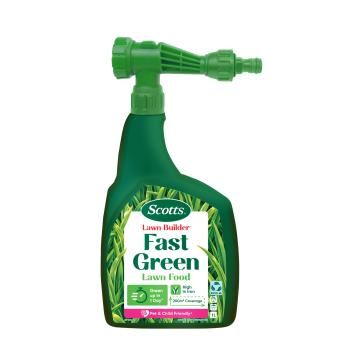
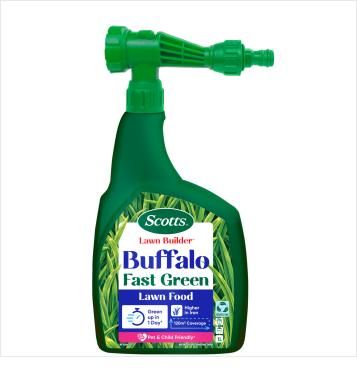
Aerate and feed the lawn to help the grass thrive. Use a high-nitrogen fertiliser such as Scotts Lawn Builder Liquid Lawn Food Fast Green or Scotts Lawn Builder™ Premium Slow Release Lawn Fertiliser.
If using green manures elsewhere in the garden or grass seed mixes to repair the lawn, carefully check the label for the presence of clover. After working to remove clover, it would be a shame to unwittingly reintroduce it!
FAQs
What’s the best clover killer for buffalo lawn?
A buffalo-safe selective herbicide is the best option. Look for products specifically labelled safe for buffalo grass to avoid damage. A product like Scotts Lawn Builder Bindii Weedkiller Refillable Bottle is a good option.
How do you kill clover without killing buffalo grass?
Use a selective broadleaf herbicide designed for buffalo lawns and apply it carefully according to instructions. Avoid non-selective herbicides, which will kill grass as well.
What’s the best spray to kill clover?
For buffalo lawns, use a buffalo-safe selective weedkiller such as Scotts Lawn Builder Bindii Weedkiller or Scotts Lawn Builder Buffalo Weed, Feed & Green Up. For other lawn types, Scotts Lawn Builder Weed, Feed & Green Up also controls clover.
When should you spray clover?
Spray clover during active growth in spring or autumn, when it is most responsive to treatment.
How do I identify a clover plant?
Clover is easy to recognise by its three-leaflet leaves and small white, pink, or purple flowers, often growing in low, spreading patches.