How to grow & care for Lilly Pilly
Lilly Pilly plants range from small shrubs to large trees - you can grow them in the ground or pots and you’ll find a Lilly Pilly for nearly any garden situation! Lilly Pilly are often grown as screen hedges because of their dense foliage, but they can also be grown for their interesting foliage - many cultivars have leaves with a weeping habit, while others send up bright red new growth above older green leaves.
Lilly Pilly flowers vary in size from small and insignificant to large and pom-pom like! If the flowers aren’t trimmed off (which commonly happens on many Lilly Pilly hedges) they’ll form into purple/magenta berries. While fruit from all Lilly Pilly plants is edible, some are more tasty than others. If you want to grow Lilly Pilly to harvest the berries for eating, choose Syzgium australe.
The common name ‘Lilly Pilly’ is used for 3 different genus including Syzygium species, Acmena species and Waterhousia species - recently many Acmena have been reclassified as Syzygium species….so it can be a little confusing!
Top 5 steps to growing Lilly Pilly
- Choose a full sun to part shade spot for your Lilly Pilly.
- Lilly Pilly will tolerate a range of soil conditions, but they’ll do best in a rich soil that’s free draining.
- Smaller Lilly Pilly will happily grow in pots, just use a suitable potting mix like Scotts Osmocote Premium Potting Mix and choose a pot with good drainage
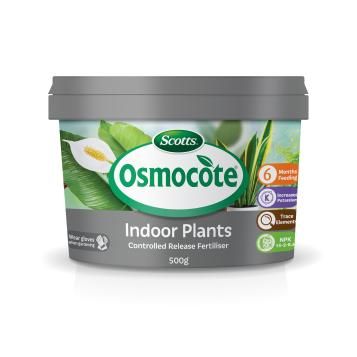
- Fertilise Lilly Pilly at least twice a year in spring and autumn with a premium fertiliser like
- Not all Lilly Pilly are frost tolerant, choose one that suits your climatic conditions if you have cooler winters.
About Lilly Pilly flowers and berries
Lilly Pilly plants produce attractive fluffy flowers followed by colourful berries, making them popular for ornamental gardens, pollinators and wildlife-friendly landscapes.
What do Lilly Pilly flowers look like?
Flowers are usually small, soft and fluffy in appearance, with clusters of white or cream stamens that give a powder-puff effect.
When do Lilly Pilly flower?
Most lilly Pilly varieties flower in spring to early summer, although timing can vary depending on species, climate and local conditions.
Do Lilly Pilly plants grow berries?
Yes, many varieties produce berries after flowering. Fruit colour may be pink, red, purple or white depending on the species or cultivar.
Do all Lilly Pilly varieties flower the same?
No, flower size, abundance, berry colour and flowering time can vary between Syzygium, Acmena and Waterhousea varieties.
Shopping List
- A Lilly Pilly plant to suit your climatic conditions and garden size
- Scotts Osmocote Plus Organics All Purpose (including Natives) Plant Food & Soil Improver
- Scotts Osmocote Compost Premium Soil Improver
- Garden Shovel
- If growing in pots, you’ll need Scotts Osmocote Premium Potting Mix + Scotts Osmocote Plus Organics All Purpose (including Natives) Plant Food & Soil Improver and a suitable pot or container
- Mulch
- Defender Pyrethrum Insect Spray
Lilly Pilly types
Lilly Pilly is the common name used for several attractive Australian native plants in the myrtle family. Many popular garden varieties belong to the genera Syzygium, Acmena and Waterhousea.
While they are often grouped together as Lilly Pilly, each has slightly different growth habits, leaf shapes and uses in the garden.
Syzygium Lilly Pilly varieties
Syzygium is the most widely grown group of Lilly Pilly plants for hedging and screening. They are known for glossy foliage, colourful new growth, fluffy white flowers and edible berries. Many modern hedge varieties have been bred for dense growth and resistance to psyllids.
Popular examples include Syzygium australe and Syzygium smithii.
Acmena Lilly Pilly varieties
Acmena is an older name, still seen on some nursery labels, for plants now classified as Syzygium. They’re popular for their neat foliage and tidy growth habit and are often chosen for formal hedges, topiary and smaller gardens.
Popular examples include Acmena smithii, now correctly classified as Syzygium smithii.
Waterhousea Lilly Pilly varieties
Waterhousea species are larger-growing Lilly Pilly relatives valued for their soft weeping foliage and fast growth. They are excellent for larger hedges, screening and feature planting where space allows.
Popular examples include Waterhousea Floribunda and Waterhousea hedge selections.
Preparation
Lilly Pilly need a full sun to part shade position, sheltered from strong winds and heavy frosts. They’ll tolerate a range of soil conditions, but Lilly Pilly will perform best if the soil is free draining and rich in nutrients and organic matter.
Prepare the soil for planting Lilly Pilly by mixing Scotts Osmocote Compost Premium Soil Improver and Scotts Osmocote Plus Organics All Purpose (including Natives) Plant Food & Soil Improver through the soil in your chosen area.
Planting in the garden
Plant your Lilly Pilly into the prepared soil - dig the hole twice as wide as the original pot and the same depth. Gently remove the Lilly Pilly from the nursery pot and tease the roots lightly if they are compact.
Plant into the hole and backfill around the plant. Water in well and keep the soil moist for the first few weeks after planting to help establish new roots.
Mulch around the drip zone of Lilly Pilly to retain moisture and suppress weeds, but keep the mulch away from the main stem.
Planting in pots
Lilly Pilly can be grown in large pots or planters with good drainage - choose a pot that’s at least 2 to 3 times bigger than the original nursery pot. Select a small growing Lilly Pilly variety, suitable for growing in pots and position the pot in a full sun to part shade spot.
Fill your pot or planter with Scotts Osmocote Premium Potting Mix. Gently remove the Lilly Pilly from the nursery pot and tease the roots lightly if they are compact. Plant the Lilly Pilly into the potting mix and backfill around the plant. Water in well and mulch over the surface of the potting mix to help retain moisture, but keep the mulch back from the plants main stems.
Lilly Pilly screening and hedges
Lilly Pilly is one of the best Australian native choices for hedges and privacy screens thanks to its dense foliage, fast growth and excellent response to pruning.
Best Lilly Pilly for screening
For tall privacy screens, vigorous Syzygium and Waterhousea varieties are excellent choices. For smaller spaces, compact Syzygium cultivars are often ideal.
Best Lilly Pilly for small spaces
Choose naturally compact or dwarf varieties that stay dense with minimal pruning, such as Syzygium australe ‘Tiny Trev’, Syzygium australe ‘Hinterland Gold’, Acmena smithii ‘Minor’, and Syzygium australe ‘Bush Christmas’. These suit courtyards, narrow side paths and front gardens.
Best Lilly Pilly for large spaces
Larger-growing varieties are suitable for boundary planting, tall hedges and noise buffers where room is available. Varieties include Syzygium australe, Syzygium smithii, Waterhousea floribunda, Syzygium luehmannii, and Acmena smithii.
How far apart should Lilly Pilly be planted for a hedge?
Spacing depends on variety size, but many hedges are planted around 1m apart for quicker coverage. Larger varieties may be spaced wider.
How do you maintain a Lilly Pilly hedge?
Water regularly while establishing, mulch well, feed during the growing season and prune lightly several times a year to keep dense growth.
How often should Lilly Pilly be pruned?
Most hedges respond well to pruning 2 to 4 times per year during active growth, depending on the desired look.
Fertilising & Care
Lilly Pilly will benefit from fertilising 2-3 times per year in spring, summer and autumn with Scotts Osmocote Plus Organics All Purpose (including Natives) Plant Food & Soil Improver. If you live in a warm climate and your Lilly Pilly continue to actively grow throughout winter they can be fertilised then too.
Large and tall Lilly Pillies that you want to grow into trees generally don’t need pruning as they naturally have a nice shape. If however, you’re growing a Lilly Pilly hedge it should be tip pruned from a young age and encouraged to grow thick and bushy with lots of branching, rather than tall and straight with minimal side branching. Encouraging bushy side growth on your Lilly Pilly hedge from a young age, with regular side and top pruning, will ensure a dense hedge later on.
Small or potted Lilly Pillies can be pruned regularly to keep their shape and size as needed.
Pests & Diseases
Psyllids are one of the most common pests attacking Lilly Pilly plants. These tiny pests go for the soft, young growth and cause unsightly pimple-like distortions on the leaves. The Syzygium are the most susceptible to psyllids, although some varieties are being bred for psyllid resistance. To control psyllids, prune off all damaged leaves and seat it into a plastic bag, before disposing of it in a garbage bin.
If you notice ants or sooty mould on your Lilly Pilly plants it’s likely to be caused by a sap sucking pest like aphids. The ants are attracted to the sweet excretions of the sap sucking pests and the sooty mould is a secondary problem that coats leaves in a black/sooty residue. Use Defender Pyrethrum Insect Spray to control the aphids and other sap sucking pests and this will in turn control the sooty mould and ants.
Lilly Pilly Growing FAQs
What are the different types of lilly Pilly?
The main groups commonly sold as lilly Pilly are Syzygium, Acmena and Waterhousea.
What is the difference between Acmena and Syzygium lilly Pilly?
Generally, Syzygium varieties are more commonly used for modern hedging and screening, while Acmena names are often associated with older classifications and compact ornamental forms.
Is Waterhousea a lilly Pilly?
Yes, Waterhousea is commonly grouped with lilly Pilly plants and is widely used for hedging and screening.
Which lilly Pilly grows fastest?
Many Waterhousea and vigorous Syzygium varieties are considered fast-growing when conditions are suitable.
Does Lilly Pilly make a good hedge?
Yes, Lilly Pilly is one of the most popular hedge plants in Australia because it is fast-growing, dense and easy to prune.
What is the best Lilly Pilly for screening?
Dense-growing Syzygium varieties are often considered the best all-round option for screening.
How quickly does Lilly Pilly grow as a hedge?
Growth rate depends on variety and conditions, but many types grow quickly with regular water and feeding.
How tall can a Lilly Pilly screen grow?
Some varieties can be kept at 2–3m, while larger forms may grow much taller if left unpruned.