
Pots make it possible to grow a garden almost anywhere, from a backyard or courtyard to a compact balcony. With so many sizes, shapes and materials available, the right pot can complement your space while giving your plant the conditions it needs to thrive.
Before choosing a pot, consider the plant's mature size, root system, watering needs and growing position. Good drainage, enough room for potting mix and a stable shape are the essentials to get right.
What to look for when choosing a pot
A good pot should suit both the plant and the place where it will be grown. Before making your choice, check:
- The pot has adequate drainage holes.
- There is enough depth and width for the plant's roots.
- The pot is stable enough for the plant's mature size.
- The material suits the amount of sun, heat, wind and rain it will receive.
- The filled pot can be safely moved, if needed.
Choose the right size and shape
The pot should give the roots room to grow without overwhelming a small plant with too much potting mix. When repotting, choose a container that is moderately larger than the plant's current pot or root ball.
Consider the plant's natural growth habit too. Shallow-rooted plants may suit wider pots, while plants with deeper roots need more depth. Tall shrubs, screening plants and small trees are generally more secure in broad, stable pots that are less likely to tip over in windy conditions.
Pots with straight or slightly tapered sides are a practical choice because the root ball can usually be removed more easily. Urn-shaped pots with narrow openings may look attractive, but removing an established plant can be difficult once its roots have filled the wider section below.
Top tip
Choose a pot based on the plant's expected mature size, not just how it looks when first planted.
Choosing a pot material
There is no single material that suits every garden. The best option depends on the plant, the growing conditions and whether the pot needs to be moved.
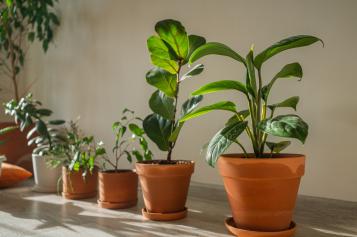
- Terracotta: Has a natural look but can dry out quickly during hot or windy Australian weather.
- Glazed ceramic: Decorative and less porous than terracotta, but often heavy once filled.
- Plastic and composite: Lightweight, easy to move and generally slower to dry out.
- Concrete and stone: Durable and stable for larger plants, but extremely heavy once planted.
- Metal: Creates a modern look but can heat up quickly in direct sun, which may place extra heat around the root zone.
Drainage is essential
Whatever style you choose, make sure the pot has adequate drainage holes so excess water can escape. Most plants will struggle if their roots remain in waterlogged potting mix.
Always use a quality potting mix suited to the plant rather than filling containers with garden soil. Garden soil can become heavy and compacted in pots, restricting drainage and reducing the air available around the roots.
Pot feet can help keep drainage holes clear on hard surfaces. If using a saucer, empty it regularly so the base of the pot is not left sitting in water.
Top tip
If a decorative pot has no drainage holes, keep the plant in a separate nursery pot that can be removed for watering and allowed to drain fully before being returned.
Pots for balconies and exposed areas
Balconies and rooftops can be hotter and windier than ground-level gardens. Wider, stable pots are generally safer for tall plants, while hanging baskets and lightweight containers may need extra protection from strong winds.
Consider the combined weight of the pot, wet potting mix and mature plant, particularly on balconies or raised structures. For larger containers, check any relevant weight restrictions before planting.
Growing shrubs and small trees in pots
Many compact shrubs, dwarf fruit trees and smaller ornamental trees can grow successfully in containers. Choose a variety suited to pot growing and provide a large, stable container with adequate drainage and enough depth for its roots.
Check larger container plants regularly and be prepared to refresh the potting mix, repot the plant or carry out suitable root and canopy maintenance as it grows. Place the pot in its intended position before filling it, as it may be extremely difficult to move afterwards.
Top tip
Half wine barrels can suit some compact shrubs and dwarf fruit trees, provided they are sound, stable and have adequate drainage. Always match the container's depth and volume to the plant's root system and mature size.
Balance style with function
Your pots can complement the colours and textures of your plants or create a bold contrast. There is plenty of room to have fun with style, as long as the plant's basic needs come first. Choose a pot with good drainage, enough room for healthy root growth and a shape and weight that suit its position.