
Even in the protected environment of your home, indoor plants can still attract pests and develop diseases. Checking your plants regularly will help you spot problems early, before they have a chance to spread.
Identify & treat indoor plant pests
What are fungus gnats?
Fungus gnats are small, dark flies that hover around indoor plants and walk across the surface of the potting mix. Their larvae live in damp potting mix, where they feed on fungi, decaying organic matter and sometimes fine plant roots.
How to control fungus gnats
Allow the upper layer of potting mix to dry between waterings, where suitable for the plant, and empty any water sitting in saucers or decorative pots. Yellow sticky traps can help capture adult gnats, while a thin layer of horticultural grit or a purpose-made fungus gnat barrier can make it harder for them to lay eggs.
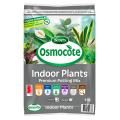
If plants growing in traditional potting mix are badly affected, repot them into fresh potting mix and discard the old mix outdoors. Scotts Osmocote Premium Potting Mix for Indoor Plants is formulated without compost or pine bark that are known to shelter fungus gnats.
What are aphids?
Aphids are small, soft-bodied insects that gather around new shoots, buds and the undersides of leaves. They feed on plant sap and may cause curled, distorted or weakened growth.
How to control aphids
Keep new plants separate from the rest of your collection for a couple of weeks and check them carefully for pests. If you spot aphids, isolate the affected plant and wipe or rinse them away. Heavily infested growth can be removed with clean secateurs.
If further treatment is needed, take the plant outside and use a registered insecticide labelled for aphids and suitable for the affected plant. Always follow the label directions.
What are whiteflies?
Whiteflies are tiny, white, winged insects commonly found underneath leaves. When an affected plant is disturbed, the adults often flutter into the air. They feed on plant sap and can cause leaves to yellow or weaken.
How to control whiteflies
Isolate the affected plant, then take it outside and gently rinse both sides of the leaves with water. Remove badly affected leaves and use yellow sticky traps to monitor and capture flying adults.
If the infestation continues, use a registered insecticide labelled for whiteflies and suitable for the affected plant. More than one treatment may be required, so follow the label directions carefully.
Indoor plant fungal diseases
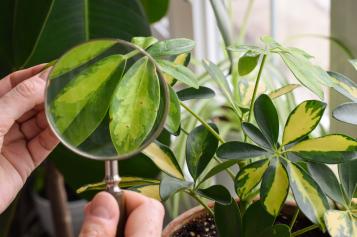
Indoor plants can sometimes develop fungal problems such as mould, mildew and leaf spots. Poor air circulation, consistently damp leaves, excess humidity and overwatering can all increase the risk.
How to control fungal diseases
Give plants enough space for air to circulate and avoid overwatering or repeatedly wetting their leaves. Remove affected or dead leaves with clean secateurs and clear away any decaying material from the surface of the potting mix.
If the problem continues to spread, identify the disease before applying a treatment. Only use a fungicide if the plant and disease are included on the product label.
Unfavourable conditions for indoor plants
Not every brown leaf or wilted stem is caused by a pest or disease. Indoor plants can react quickly when their growing conditions are not quite right.
Underwatering
A lack of water may cause wilting, dry potting mix and crisp brown leaves. Water thoroughly until excess water drains from the pot, then empty the saucer or decorative pot.
Overwatering
Overwatering may cause yellow leaves, wilting, root or stem rot and an unpleasant smell from the potting mix. Allow excess moisture to drain away. If the roots have begun to rot, remove the damaged sections and repot the plant into fresh potting mix.
Draughts
Strong airflow from heaters, air conditioners, doors or windows can dry out leaves and cause brown edges. Move sensitive plants to a position with stable temperatures and light suited to their needs.