
Dry-proofing your garden
Australian gardens often need to cope with hot weather, dry spells and changing rainfall. While no garden is completely drought-proof, healthy soil, suitable plants and efficient watering can make yours more resilient when conditions turn dry.
The aim is to help water reach the roots while reducing unnecessary moisture loss. Follow these practical steps to make every drop count.
Water-saving tips for your garden
Water deeply, not little and often
For most established garden plants, a thorough watering is more effective than frequent light sprinkling. Apply water slowly so it soaks below the surface and reaches the root zone.
Deeper watering encourages roots to grow further into the soil, where moisture is better protected from heat and evaporation. How often you need to water will depend on the weather, soil, plant type and how established the garden is.
Check the soil first
Before watering, check whether the soil below the surface is beginning to dry out. The surface may look dry while moisture is still available around the roots.
New plants, pots and hanging baskets usually need closer attention than established garden plants, particularly during hot or windy weather.
Water early in the morning
Early morning is generally the best time to water. Cooler conditions reduce evaporation and give moisture time to soak into the soil before the heat of the day.
Direct water onto the soil around plants rather than unnecessarily wetting the foliage. This gets water closer to the roots and may also help reduce the risk of some fungal diseases.
Group plants by their water needs
Grow plants with similar watering needs together. This makes it easier to give each area the right amount without overwatering drought-tolerant plants or leaving thirstier plants too dry.
If you want to grow a few water-loving plants, group them in one accessible area or keep them in pots so additional watering can be targeted where it is needed.
Choose plants suited to your garden
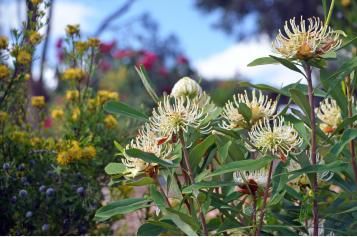
Select plants that suit your local climate, soil and sunlight. Once established, many drought-tolerant Australian natives and plants from dry Mediterranean-style climates can manage with less supplementary watering.
Remember that drought tolerant does not mean no watering. New plants still need regular moisture while their roots establish, and established plants may need extra support during prolonged heat or dry conditions.
Remove weeds regularly
Weeds compete with garden plants for water, nutrients, light and growing space. Remove them before they become established or produce seed so more of the available moisture reaches the plants you want to keep.
Protect soil with mulch
Organic mulch helps reduce moisture loss, limit weed growth and protect roots from temperature extremes. Water the soil before applying mulch, then spread it evenly across the garden bed.
Leave a clear space around stems and tree trunks, as mulch piled against the base of plants can hold excess moisture and encourage disease. Check it regularly and top it up as it settles and breaks down.
Improve the soil
Adding suitable compost or soil improver can improve the structure and water-holding capacity of many garden soils. Incorporate organic matter when preparing new beds or work it gently around established plants without damaging their roots.
Deliver water to the roots
Drip irrigation and soaker hoses can direct water into the soil with less overspray. Apply water slowly and evenly, then check that it has reached the root zone rather than running off or only wetting the surface.
When water is scarce
Always follow current water restrictions in your area. Prioritise newly planted trees and shrubs, young plants, productive fruit trees and valuable established plants that would be difficult to replace. Pots and hanging baskets may also need attention because they can dry out quickly.
Avoid relying on a fixed schedule such as watering once every two weeks. Plant needs vary with temperature, wind, soil type, local climate and root establishment. Check the soil and water according to the conditions and the needs of each plant.
Build a more water-wise garden
Dry-proofing is an ongoing process. Start with suitable plants, improve the soil where needed, mulch exposed beds and adjust your watering as the garden becomes established. Small changes can help your garden use water more efficiently and stay healthier through Australia’s warmer, drier conditions.