How to Grow Frangipani
Frangipani are one of Australia’s most recognisable flowering trees, loved for their fragrant blooms, sculptural branches and relaxed tropical feel. They suit warm, sunny gardens and are particularly useful where you want summer colour, light shade and a low-maintenance feature plant.
Once established, frangipani are hardy and drought tolerant, but their success depends on the right start. Good drainage, plenty of sun and careful watering through the first season are the main things to get right. In cooler regions, they can still be grown, but they need a warm, sheltered position and protection from frost.
Top 5 steps to growing frangipani
-
Choose a warm, full sun position with protection from strong winds.
-
Plant into free-draining soil and avoid areas that stay wet in winter.
-
Water regularly while the plant establishes, then reduce watering once it is settled.
-
Avoid watering dormant, leafless plants during winter to reduce the risk of rot.
-
Feed during spring and summer to support healthy growth and flowering.
Essential shopping list
-
Frangipani plant
-
Organic mulch
-
Garden shovel and stakes
Preparation
Frangipani need a position that receives at least half a day of direct sun, though full sun will usually give the best flowering. They dislike wet feet, so drainage is more important than richness of soil. Sandy or loamy soils are ideal, while heavier clay soils should be improved before planting or avoided if they remain damp through winter.
Before planting, work organic matter through the soil to improve structure and help young roots establish. Scotts Osmocote® Compost Premium Soil Improver is a suitable soil preparation option where you want to improve tired garden soil before planting. If the site is exposed to strong winds, choose a more sheltered position because mature frangipani branches can be brittle.
Planting frangipani in the garden
Plant frangipani during spring or early summer, when the soil has warmed and the plant is beginning active growth. Dig a hole twice as wide as the root ball and about the same depth. Position the plant so it sits at the same level it was in the pot, then backfill gently and water in well to settle the soil around the roots.
Apply mulch around the base to help retain moisture while the plant establishes, but keep mulch away from the trunk. If the tree is young, tall or recently transplanted, stake it lightly until the roots hold firm. Avoid overworking or damaging the roots when planting, as young frangipani can be slow to recover from root disturbance.
Growing frangipani in pots
Frangipani can be grown successfully in large pots, especially dwarf or compact varieties. Choose a pot with excellent drainage and enough weight to balance the plant as it grows. Fill with a free-draining mix such as Scotts Osmocote® Premium Potting Mix, then position the pot somewhere warm and sunny.
Potted frangipani dry out faster in summer than plants in the ground, but they are still vulnerable to overwatering. Water well when the mix has dried, then allow it to drain freely. In cooler months, reduce watering significantly, particularly when the plant has dropped its leaves.
☀️ HOW TO GROW FRANGIPANI IN WESTERN AUSTRALIA CONDITIONS
Frangipani are well suited to Perth and many Western Australian gardens when planted in the right conditions. They are at home in Perth gardens if established at the right time of year, with late spring to early summer recommended because young plants are sensitive to frost until established.
Choose a sunny position with well-draining soil and improve the planting area with organic matter before planting. In sandy soils, this helps support establishment and moisture retention. Once established, reduce watering and avoid watering during winter dormancy, as too much moisture is one of the main causes of rot in frangipani.
Watering and feeding
Water regularly during the first growing season to help the plant establish. After that, frangipani are quite drought tolerant and only need extra water during long hot, dry periods. The key is to water deeply, then allow the soil to dry before watering again.
Feed during the active growing season, generally spring and summer. A controlled release fertiliser such as Scotts Osmocote® Controlled Release Fertiliser: All Purpose can be used to support steady growth, foliage health and flowering. Avoid heavy feeding in winter when the plant is dormant.
Pruning and maintenance
Frangipani naturally develop a branching, open shape and usually need very little pruning. Remove damaged, diseased or crossing branches when needed, and lightly shape the tree if it is becoming too wide for the space. Pruning can also encourage more branching, which may lead to a fuller canopy over time.
Make clean cuts with sharp tools and avoid pruning during wet weather where possible. The white sap can irritate skin, so wear gloves and avoid contact with eyes or sensitive skin. Allow pruned sections to dry naturally rather than sealing them.

Flowering and growth
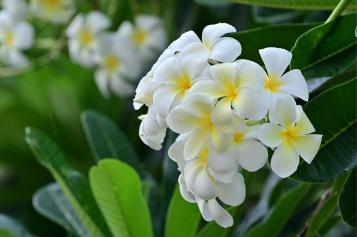
Frangipani flower through the warmer months, typically from summer into autumn. Flower colour varies widely, from classic white and yellow through to pink, orange, red and multi-coloured forms. The fragrance is one of the main reasons gardeners grow them, especially near paths, patios and pools.
Most commonly grown frangipani are deciduous, dropping their leaves through winter before putting on new growth in spring. In suitable conditions, they can grow into small trees with broad canopies, making them useful for light shade in summer while allowing winter sun through once leafless.
Climate and positioning tips
Frangipani grow best in tropical, subtropical and warm temperate regions. In cooler climates, choose the warmest possible microclimate, such as a north-facing wall or sheltered courtyard. Frost can damage young plants, so container growing may be useful where winter protection is needed.
They also suit coastal gardens because they tolerate sandy soils and dry conditions once established. Avoid low-lying frost pockets and positions where winter moisture sits around the root zone. If the soil stays wet, growing in a large pot may be the safer option.
How to propagate frangipanis
Frangipani are commonly propagated from cuttings. Take a cutting from mature wood, then allow the cut end to dry and callous before planting. This drying period is important because fresh cuttings are prone to rotting if planted straight into moist soil.
Once calloused, plant the cutting into a free-draining mix and water sparingly until roots begin to form. Keep it in a warm, bright position while it establishes. Avoid constantly wet soil, as cuttings are most vulnerable to rot before they have formed roots.
Pests & diseases
Frangipani are generally hardy, but they can be affected by frangipani rust, caterpillars, scale, aphids and mealybugs. Frangipani rust appears as orange or rusty spots on the underside of leaves and is more common when airflow is poor or humidity is high. Remove fallen or badly affected leaves and improve airflow around the plant to reduce spread.
Sap-sucking pests such as scale and mealybugs may appear on stems or leaf joints and can weaken soft new growth. Caterpillars can chew leaves quickly, especially on young plants. The most serious non-insect issue is root rot, which is usually linked to overwatering or poor drainage, so keeping the soil free-draining is the best prevention.