

If you want to grow something spectacular, try sunflowers. They come in a whole range of sizes, from dwarf to giant, and as well as the classic golden-yellow flowers, you can also grow sunflowers with red, orange or even white blooms. Sowing sunflowers (Helianthus annuus) is a great way to get kids into gardening, and they’re perfect for wildlife-friendly gardens.
The best sunflowers to plant
There are more than seventy different sunflower varieties available. Some dwarf varieties only grow 50cm (20in) high, while the tallest sunflowers can top out at over 3m (10'). Here are a few of our favourites:
Giant sunflowers
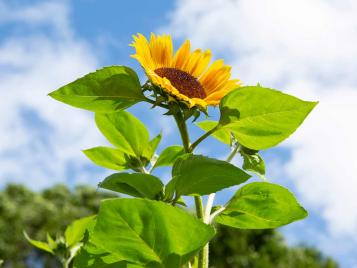
- Sunflower ‘Russian Giant’ – 3m (10ft) tall, with bright golden-yellow flowers
Tall sunflowers
- Sunflower ‘Velvet Queen’ – 1.8m (6ft) tall, with dramatic deep red flowers
- Sunflower ‘Earth Walker’ – 1.8m (6ft) tall, with flowers in shades of bronze, orange and yellow
- Sunflower ‘Red Sun’ – 1.8m (6ft) tall, with deep red flowers and almost black centres
- Sunflower ‘Valentine’ – 1.5m (5ft) tall, with creamy yellow flowers
Dwarf sunflowers

- Sunflower ‘Teddy Bear’ – 50cm (20in) tall, with round double yellow pompom flowers
- Sunflower ‘Dwarf Yellow Spray’ – bushy plants 60cm (2ft) tall, with yellow flowers
Essential sunflower growing equipment list
To grow sunflowers at home in your garden, you will need:
- Sunflower seeds
- Rake
- Trowel
- Pots
- Compost such as Miracle-Gro Premium All Purpose compost
- Clear plastic bags or propagator
When to plant sunflowers
Sunflowers can take as long as 18 weeks to flower, so you should plant them as early in the spring as you can without exposing them to frost. This ideally means sowing indoors in pots in April, and then planting outside in May, although these timeframes vary depending on where you are in the UK and how likely a spring frost might be. Try not to leave them indoors for too long, as this can risk sunflowers becoming long, leggy and spindly.
Follow this process for super summer sunflowers:
-
Fill small pots with multipurpose compost.
-
Plant one seed per pot, 1.5cm deep.
-
Water the pots and cover them with clear plastic bags.
-
Place the pots somewhere warm, bright and frost-free, such as a windowsill that doesn’t get direct sunlight.
-
Once the seeds have germinated, remove the plastic bags. Keep the compost moist.
-
Harden plants off for two weeks before planting outside, by placing the pots outside during the day and bringing them back inside at night.
-
Before planting sunflowers outside, clear the ground of weeds, and dig in lots of compost or well-rotted farmyard manure.
-
Space the plants 45cm (18in) apart.
-
Water well after planting
When to plant sunflowers outside
May is the best time to start the hardening off process, acclimatising sunflowers to outdoor conditions before planting them outside permanently. This lessens the ‘shock’ of outdoor conditions and gives them time to adapt, so that they have a better chance of thriving through the summer.
Over a period of ten days, you should place them outside for a certain period of time, starting at around 2-3 hours, gradually increasing the length of time each day. You should also adjust where they’re placed outside so that they’re exposed to more and more direct sunlight day by day.
You can also sow sunflower seeds outdoors around late May, for flowering in late summer or early autumn. Here’s how to do it:
-
Clear the ground of weeds and dig in plenty of compost or well-rotted farmyard manure.
-
Rake the ground to create a level surface with a fine, crumbly texture.
-
Sow seeds 1.5cm deep, 10cm apart and water well.
-
Once the seedlings have germinated, thin them out to 45cm apart.
Where to grow Sunflowers
Sunflowers have two essential needs – fertile soil and lots of sun. Once you’ve ticked those boxes, you can let your imagination run wild when planting sunflowers.
Plant dwarf varieties in containers and create your own ‘Van Gogh’-style effects. If you have the space, why not plant an avenue of sunflowers along a path? Or simply plant sunflowers in blocks in your borders for maximum impact in summer.
Growing sunflowers for picking
If you are growing sunflowers for picking to use in arrangements, you need bushy plants that will produce plenty of blooms. To create bushy sunflowers, pinch out the growing tips of the plants (the cluster of leaves at the top of the plant). The plants will respond by putting out lots of flower-bearing side shoots.
For tall sunflowers, pinch out the tips when the plants reach 20cm (8in) tall.
Cut back or pinch out dwarf sunflowers once they are 10-15cm (4-6in) tall, leaving just two pairs of leaves on the stem. When the plant has grown another 7-10cm (3-4in), repeat the process.
How to care for sunflowers
Run through the following steps to give your sunflowers the care and attention they deserve:
- Support tall sunflowers with stakes as they grow.
- Once the flowers appear, feed sunflowers weekly with a high potassium feed (tomato feed is ideal).
- Water regularly during dry periods, especially the tall varieties, as it’s difficult for them to recover if they are allowed to dry out and wilt.
- Once the flowers have finished, leave the heads on the plants for the birds – finches and sparrows love them.
- In late autumn, pull up the plants and compost them.
What to feed sunflowers
Sunflowers require substantial quantities of nutrients, with a balanced nutrient supply helping them establish a strong root network to expand their nutrient-drawing capabilities. Liquid fertiliser helps them take in nutrients quickly, while granule-based fertiliser can promote sustained and gradual nutrient intake over time.
Sunflowers require substantial quantities of nutrients, with a balanced nutrient supply helping them establish a strong root network to expand their nutrient-drawing capabilities. Liquid fertiliser helps them take in nutrients quickly, while granule-based fertiliser can promote sustained and gradual nutrient intake over time.
How to collect sunflower seeds
- To collect sunflower seeds, wait till the petals start to drop. You may need to cover the flowers with nets to protect them from birds.
- Cut the flowers off with a long stem.
- Cover the flowerheads with paper bags and hang the flowers somewhere warm and well-ventilated for a few weeks to dry.
- Once the flowers have finished you can leave the seed heads on the plants for the birds – finches and sparrows love them and you can also collect your own seed.
- Store seeds in an airtight container.
If you’ve never grown a sunflower, now’s the time to start. And with so many beautiful varieties available, the only difficulty about growing sunflowers is choosing which one to grow.
Fascinating facts about sunflowers
- The tallest sunflower on record was grown in Germany in 2014 and reached 9.17m (30ft).
- The central disc of a sunflower is made up of many individual tiny flowers. The petals around the edge of the sunflower are there to attract pollinators to the flowers in the centre.
- Sunflowers are heliotropic – this means they follow the sun, tracking its position so that the developing flowerbuds are always facing the sun. Fully-grown sunflowers don’t tend to follow the sun, as the flowerheads are too heavy.
- If sunflowers aren’t pollinated by insects in the normal way, they can pollinate themselves. Each tiny flower in the central disc is able to curl its pollen-laden stigma around and transfer pollen to the flower’s anther, which will then develop into a seed.
Common pests and diseases in sunflowers
Sunflower leaves turning yellow
Sunflower leaves turning yellow may be caused by sclerotinia disease, a soil-borne fungus. Affected plants turn yellow, wilt and die. The stems often rot near the base, and white fluffy fungal growth appears at the rotting area, followed by black seed-like structures.
- Remove and destroy any affected plants immediately. Do not put them on a compost heap, as this will contaminate the compost.
- No chemical controls are available.
Slugs and snails
Common sunflower pests include slugs and snails, which will attack young sunflower seedlings, and can be identified by the slime trails that they leave, as well as the damage they do. As the plants grow taller they are less at risk of damage.
- Sow seeds in pots placed out of reach of slugs and snails.
- Check plants at night and remove slugs and snails by hand.
- Covering the soil around plants with crushed eggshells or a grit barrier.
- Scatter slug pellets if other methods are insufficient.
Key features of sunflowers
| Flowering season(s) | Summer, Autumn |
|---|---|
| Foliage season(s) | Spring, Summer, Autumn |
| Sunlight | Full sun |
| Soil type | Chalky, Clay, Loamy, Sandy |
| Soil pH | Neutral |
| Soil moisture | Moist but well-drained |
| Ultimate height | Up to 5.4m (18ft) |
| Ultimate spread | Up to 90cm (3ft) |
| Time to ultimate height | 6 months |


