
Citrus and fuit trees use nutrients they take up from the soil through their roots to grow, flower, and fruit.
Over the growing season, citrus and fruit trees need different nutrients at different rates and times to encourage fruit development, healthy foliage and strong roots.
When to fertilise citrus trees in Australia
The best time to fertilise citrus trees in Australia is from early spring through to early autumn, when trees are actively growing. Start feeding as new growth appears in spring (around August–September), continue regularly through summer, and reduce feeding in autumn. Avoid fertilising during winter in most regions, as cold soil limits nutrient uptake.
Citrus trees benefit from regular feeding every 2–3 months during the growing season. Consistent, smaller applications are more effective than occasional heavy feeding, especially during flowering and fruit development.
How do you keep citrus trees healthy?
What are citrus fertiliser NPK ratios?
Fertilisers are combinations of essential elements that have been mixed at a specific ratio to encourage plants to grow, flower or fruit.
Fertiliser manufacturers list these ratios on the packets, usually shown as N:P:K or Nitrogen (N), Phosphorus (P) and Potassium (K). These are the macro or major chemical elements that directly impact citrus tree growth and development.
Citrus trees also require micro nutrients and trace elements to maintain optimal health. To see what these are and why they are important to plants, refer to the Fertiliser Components and their Uses table below.
| Macro nutrients | Nitrogen (N) | Helps plants grow and produce foliage. |
| Potassium (K) | Promotes bud and fruit development. | |
| Phosphorus (P) | Stimulates healthy root growth and development. | |
| Micro nutrients | Magnesium (Mg) | Soils can become low in magnesium which results in yellowing leaves. Epsom salts will help to improve the magnesium available to plants and help green up their foliage. |
| Calcium (Ca) | Calcium is important in the soil for root development and cell integrity which helps harvested fruit, like apples, to store well. | |
| Sulphur (S) | Important in the uptake and processing of other nutrients and compounds, and in maintaining optimal plant health. | |
| Other | Trace elements | These include iron, zinc, copper, manganese, boron, molybdenum and chlorine. These have many purposes within plants including cell structure, cell compositions, chlorophyll production, etc. |
Most fertiliser packaging will include a Guaranteed Analysis that lists all major, minor and trace elements included and their relevant percentages or parts per million.
What citrus plant fertiliser should you use and when?
| Type of tree | Type of fertiliser | When to use fertiliser |
|---|---|---|
| On young trees | Use a high Nitrogen ratio to help develop strong growth and a good framework. | Additional application of chicken manure will also be of benefit. |
| On fruit bearing trees | Use high potassium fertilisers to encourage a good harvest. | After harvest, apply high nitrogenous fertilisers until autumn to strengthen growth. |
| Dormant trees | Do not fertilise | Wait until growth starts in late winter and early spring. |
| Other nutrients | Apply trace elements in spring and autumn. | Apply organic material prior to planting and in spring. |
| Additional fertilising | Seaweed solution will improve plant pest and disease resistance. | Liquid fertilisers help to give plants an instant boost as they contain a mix of macro, micro and trace elements. |
Timing fertiliser correctly helps citrus trees use nutrients when they need them most. As soil temperatures rise in spring, roots become more active and can absorb nutrients efficiently. This supports new leaf growth, flowering, and fruit set. During summer, trees use large amounts of nutrients to develop fruit, while in cooler months, uptake slows significantly. Feeding at the wrong time can waste fertiliser or encourage weak growth instead of fruit production.
Seasonal fertiliser schedule
Following a seasonal schedule ensures your citrus trees receive nutrients when they can use them most effectively.
- Spring (September–October): Continue fertilising as new growth appears. This is an important feeding period, supporting leaf growth and flower bud development.
- Summer (November–February): Continue regular feeding to support flowering, fruit set, and fruit development. Trees have their highest nutrient demand during this time.
- Autumn (March–May): Reduce feeding as growth slows. A light application can help replenish nutrients after fruiting.
- Winter (June–July): Avoid fertilising in most climates. Root activity is low, so nutrients are not absorbed efficiently.
- Late winter (August): Root activity starts increasing again – this is when feeding for the season should begin, ahead of new spring growth.
What are the best fertilisers for different fruit trees?
Different fruit trees have slightly different nutrient needs, although most benefit from balanced fertilisers with added micronutrients.
Lemon trees
Lemon trees are heavy feeders and benefit from a citrus fertiliser with nitrogen plus potassium and trace elements such as magnesium and iron, to support flowering and fruit as well as leafy growth - try Scotts Osmocote® Controlled Release Fertiliser: Citrus & Fruit or Scotts Osmocote® Plus Organics Citrus & Fruit Plant Food & Soil Improver, and for potted lemons, Scotts Osmocote® Citrus & Fruit Potting Mix.
Lime trees
Lime trees respond well to regular feeding with a balanced citrus fertiliser, particularly during active growth and fruiting periods.
Orange trees
Orange trees require a balanced fertiliser with added trace elements like magnesium and iron to support healthy foliage and fruit quality.
Apple trees
Apple trees prefer a more balanced fertiliser applied in early spring, with less emphasis on nitrogen to avoid excessive leafy growth.
Stone fruit trees (e.g. peach, plum)
These trees benefit from fertilising in early spring to support flowering and fruit set, with lighter feeding after harvest.
How do you apply citrus fertiliser?
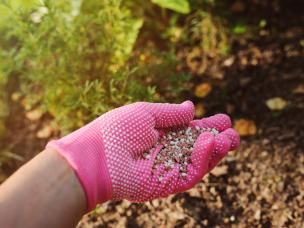
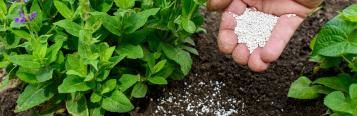
When applying granular fertilisers on your fruit or citrus tree:
- Wet the soil before and after applying fertiliser.
- Apply over the root zone of the fruit tree around the dripline (directly beneath the outer perimeter of the canopy). This is where the feeding roots are found, not in close to the trunk of the tree.
When using Scotts Osmocote® Controlled Release Fertiliser for Citrus & Fruit, read the labels before using to determine how much and how often you should be using them. Some are three month formulations, some six month and one or two will feed for up to 12 months.
The importance of citrus soil pH for citrus trees
The pH of your soil determines the availability of some nutrients.
- Test your pH every three to four years and adjust accordingly - see Healthy Soil = Healthy Plants for more details.
- Ph should be between 5.5 and 7.0 for most fruit trees.
FAQs
How often should I fertilise citrus trees in Australia?
Every 2–3 months during the growing season (spring to early autumn).
What month should I start fertilising citrus?
Start in late winter to early spring, usually August or September.
Can I fertilise citrus trees in winter?
Generally no, as cold soil reduces nutrient uptake.
What happens if I fertilise citrus at the wrong time?
Nutrients may be wasted or encourage poor growth instead of fruiting.
What is the best fertiliser for citrus trees?
Use a citrus-specific fertiliser with nitrogen, phosphorus, potassium, and trace elements.