
Growing Fruit Tree Basics
Growing your own fruit is one of the most rewarding ways to make the most of your backyard. Give your tree a sunny position, well-prepared soil and regular care, and you’ll set it up for healthy growth and plenty of future harvests.
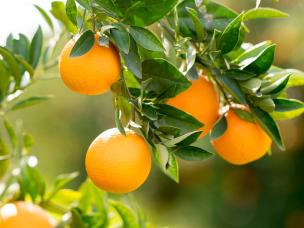
Whether you’re planting a deciduous fruit tree or an evergreen such as citrus, getting the basics right from the beginning will help your tree settle in and grow with confidence.
Choosing the Right Location
Most fruit trees need at least six hours of direct sunlight each day. Watch your backyard at different times of the day to find a position with adequate light and enough space for the tree’s mature size.
Remember that the sun sits lower in the sky during winter, so shadows will be different from those in summer. Where possible, choose a position that receives good year-round sunlight and is protected from strong winds.
Fruit trees also need soil that drains freely. Avoid low-lying areas where water regularly collects after rain.
Preparing the Soil
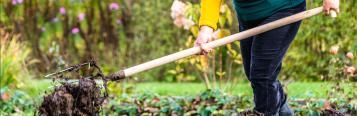
Good soil preparation helps new roots establish and spread into the surrounding ground. Before planting, remove weeds and grass from around the planting area.
Dig a hole wider than the tree’s root ball or bare-root system, but no deeper than required. Avoid digging an excessively deep hole, as the tree may settle below the surrounding soil level.
Improve the surrounding garden soil with organic matter such as Scotts Organic Soil Improver. Mix it through the excavated soil according to the product directions rather than placing a concentrated layer at the bottom of the hole.
How to Stake a Fruit Tree
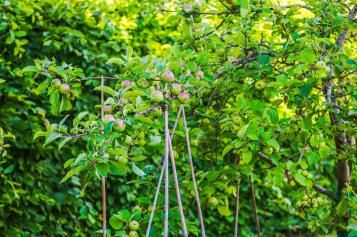
A stake can help support a young tree in an exposed or windy position while its roots establish. Install any stakes at planting time to reduce the risk of disturbing the roots later.
-
Position stakes outside the main root ball, taking care not to damage large roots.
-
Use a loose figure-eight tie so the trunk has room for a little natural movement.
-
Choose a wide, soft tree tie that will not rub against or cut into the trunk.
-
Check the ties as the tree grows and loosen or remove them when support is no longer needed.
Planting a Bare-Root Fruit Tree
Bare-root fruit trees are generally sold during winter while they are dormant and without leaves. Instead of arriving in a pot, their roots may be completely bare or packed in moist material and wrapped for protection.
This is a common way to buy deciduous fruit trees such as apples, pears, plums, peaches and nectarines.
- Prepare the soil and dig a hole wide enough to spread the roots without bending or crowding them.
- Create a small mound of soil in the centre of the hole and spread the roots evenly over it.
- Position the tree so the previous soil mark on the trunk is level with the surrounding ground.
- Keep the graft or bud union clearly above the soil level.
- Backfill carefully around the roots, gently firming the soil to remove large air pockets.
- Water thoroughly to settle the soil around the roots.
Planting a Potted Fruit or Citrus Tree
- Water the tree before planting and allow it to drain.
- Dig a hole wider than the root ball and approximately the same depth.
- Carefully remove the tree from its pot and gently loosen any tightly circling outer roots.
- Place the tree in the hole so the top of the potting mix sits level with the surrounding soil.
- Backfill around the root ball and gently firm the soil without compacting it heavily.
- Add stakes if required, then water thoroughly.
Caring for a Newly Planted Fruit Tree
Regular care during the establishment period will help your fruit tree develop a healthy root system and strong new growth.
-
Watering: Water deeply and regularly while the tree establishes, adjusting for rainfall, soil type and weather. The soil should remain moist but not waterlogged.
-
Feeding: Feed with Scotts Organic Plant Food Concentrate Citrus & Fruit according to the label directions. Apply fertiliser to moist soil and never exceed the recommended rate.
-
Mulching: Spread organic mulch over the root zone to help retain moisture and reduce weeds, keeping it clear of the trunk.
-
Pruning: Prune at the appropriate time for your type of fruit tree to maintain a manageable shape and make future harvesting easier.
-
Pest checks: Regularly inspect the leaves, stems and developing fruit for signs of pests or disease and identify the problem before treating it.
Protecting Developing Fruit
If birds or other wildlife are damaging the crop, protect developing fruit with wildlife-safe netting that has a fine mesh. Secure it carefully so animals cannot become trapped, and check the netting regularly.
Give Your Fruit Tree a Strong Start
A sunny position, well-prepared soil and steady watering will give your new fruit tree the best chance to establish. Keep an eye on moisture, support the tree only where needed and follow a feeding and pruning routine suited to the variety you are growing.