
Our guide to garden drainage
Excess water can be a common and frustrating problem in low lying or clay soil areas. Improve your garden drainage, protect your plants and prevent water logging with our easy-to-follow guide.
Always plant for your conditions
Many beginner gardeners are not aware that choosing a plant for the garden goes far beyond the aesthetics. Ensuring the your soil type is compatible with the plant is an essential step in getting your planting scheme just right - and this is even more important if you have a soil drainage issue to work with.
Depending on the severity of the problem it might be possible to work with the waterlogging in your garden by carefully selecting plants that will thrive in wetter conditions. Some species of hydrangea work well in wetter soils, whereas if clay soil is your specific problem then geranium and fuchsia are also good options.
If, however, your heart is truly set on plants that thrive in drier conditions then container gardening can be a real lifesaver. Particularly as you get to choose which kind of soil goes into them. Just don’t forget that they also need adequate drainage. Adding some broken up pots or gravel to the bottom of the container should set you up. Using containers to get around a poor soil problem also means you have a wider choice of plant too.
Raised beds come in a number of designs now and you can even get ones that are conveniently raised off of the ground entirely. This design was originally meant for gardeners with a bad back but if you need to keep your plants (and timber planters) off the ground, these are a great way to do it.
Make use of rain barrels and water recyclers
As with most things, the old adage ‘prevention is better than cure’ applies here. Why find ways to drain water away if there’s a chance you can head it off at the pass?
Most houses have some kind of guttering system to collect and redirect water but you shouldn’t forget about outbuildings. Temporary structures like greenhouses and sheds can exacerbate a water logging issue if rain water is allowed to stream freely from a roof onto the earth below.
Even some plastic garden furniture left unmaintained can collect rain water that can make its way into your lawn or flowerbed.
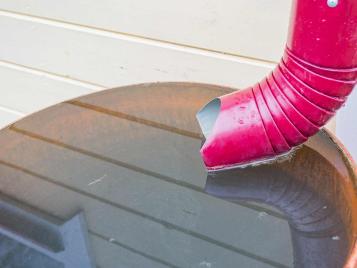
Guttering can be affixed to temporary structures fairly easily and directed into an overflow barrel or water butt, via a downpipe. Not only will this prevent rain pooling alongside your shed but you’ll also have a convenient water supply at your disposal during drier months. This means you can be solving your garden drainage problem at the same time as saving for your flowers.
Ready-made guttering kits for sheds and greenhouses help to make this a relatively convenient fix.
Create a grassy swale
If your lawn resembles a paddy field during the wetter months you might be tempted to replace it with paving stones – but that’s not your only option. If you are lucky enough to have a lot of space in your garden then a ‘grassy swale’, sometimes referred to as a contour bund, could be created in your existing landscape.
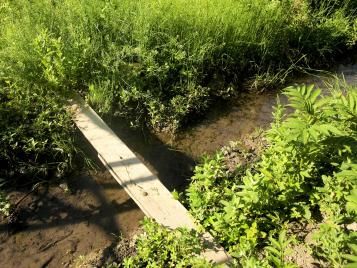
Sometimes grassy swales occur naturally in nature, often around small trees, but manmade ones are essentially a lower level of ground or a gradual slope that allows any excess water to run off and drain away keeping it out of the way of your growing areas. They were first created to reduce the damage from storm water and drain or river overspills in particularly bad weather.
It’s made by digging a ditch like area and piling up the dirt to direct storm water wherever you need it to go.
Install a French drain
If all else fails and you find that you have a more serious water logging drainage problem in your garden then you could have a ‘French drain’ installed. This system is essentially an extra underground drain pipe.
A trench is dug that can either be filled with gravel, sand, rocks or even a pipe that is made up of a perforated materials. The pipe option works particularly well if you are getting a lot of water.
Once installed, water filters down beneath the materials keeping it away from ground level and the foundations of buildings.