
Our guide to mistletoe
It’s that time of scraping your windscreen, adding an extra layer of clothing for warmth and snuggling up by the fire but that also means it’s time for us to spare a thought for our small birds and wildlife, as temperatures plummet and food becomes scarce.
What is mistletoe?
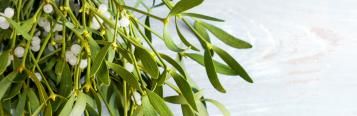
Mistletoe is an evergreen plant with white berries that parasitically grows in the branches of certain trees. It is traditionally used in festive decorations and according to Nordic mythology and Medieval beliefs, it is a symbol of peace, love and friendship.
Is mistletoe poisonous?
Mistletoe is poisonous, although it is doubtful as to whether it will actually cause death. All parts of the plant are toxic (that’s berries, stem and leaves). The mistletoe plant contains Phoratoxin and Viscotoxin, which are both poisonous proteins when ingested. With over 1500 varieties of mistletoe in the world, some are more toxic than others.
What happens if you eat mistletoe?
There is likely to be a more severe reaction to eating the white berries rather than the drinking a tea made with the leaves, but symptoms will range from mild to severe. The list of possible symptoms include:
- Blurred vision
- Fever
- Hallucinations
- Diarrhoea
- Nausea
- Stomach pain
- Vomiting
- Drowsiness
- Slowing of the heart rate
- Heart problems
- Mistletoe has been known to cause miscarriage in pregnant women
If a child has ingested any part of a mistletoe plant, the reaction is likely to be more severe than if an adult has eaten an equivalent amount. As soon as you become aware of mistletoe ingestion, it is advisable to seek medical advice as quickly as possible.
Is this the same for animals?
If your cat or dog has gobbled a couple of berries that have fallen from the festive wreath, what will happen? Pretty much the same as if eaten by a human. The reaction may be more severe, so it is important that you seek medical advice from your vet straight away, as more berries may have been eaten than you might be aware of.
Advice for avoiding accidental mistletoe poisoning
General advice on avoiding the risk of mistletoe poisoning would be to keep the plant away from children and animals. Remove all berries from your festive decorations and place them at a height, which they cannot easily be reached.