What is powdery mildew?
Powdery mildew disease is a fungal disease common on a wide range of plants. There are numerous forms of powdery mildew and it tends to occur in dry springs as well as during summer and autumn.
So, what causes powdery mildew? Powdery mildew is the fungal growth of various types of fungus.
Can powdery mildew spread to other plants?
No: the fungi are specific to one plant or a group of plants, and won't spread to other plants. For instance, powdery mildew on roses will not spread to clematis and vice versa.
What causes powdery mildew on plants?
Rust spores prosper in a moist environment. The ideal conditions for powdery mildew are where the soil is dry but the overhead conditions are somewhat humid or damp. Here we run through a few suggestions on how to deal with and treat powdery mildew on plants.
What does powdery mildew look like?
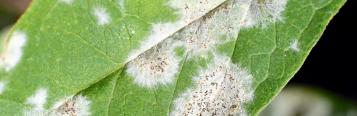
Upper plant leaves are usually the most badly affected and are covered with a dusty coating. Occasionally the mildew spreads to the underside of leaves and other parts of the plant.
Powdery mildew is usually white, but it can be pale brown such as on the underside of rhododendron leaves and on gooseberry and laurel leaves. The white covering produced by powdery mildew can also occur on the fruits of grapes, peaches and gooseberries.

Powdery mildew symptoms and damage
Powdery mildew symptoms start with a white dusty deposit on a plant’s leaves. Sometimes the leaves turn yellow and in the case of roses, young leaves may become distorted.
Occasionally the mildew kills off leaf tissue which falls away and creates a shot hole effect. The growth of the plant slows down and infected leaves gradually die back and drop off.
Powdery mildew treatment and control
How to get rid of powdery mildew?
- In the spring, as soon as you see signs of powdery mildew, remove all infected parts of the plant.
- Try not to shake the mildew spores onto healthy leaves.
- Compost infected foliage in a hot compost system.
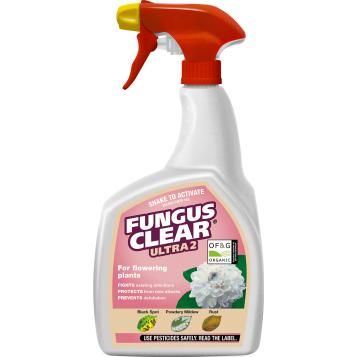
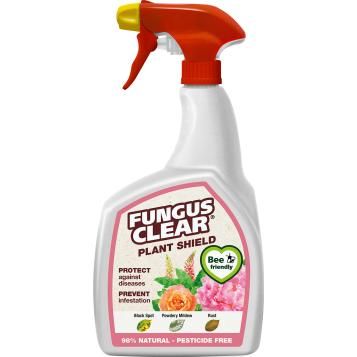
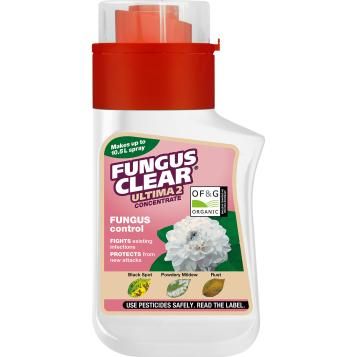
- Use a powdery mildew treatment like a powdery mildew spray fungicide, repeating as recommended. There are no chemicals approved for control of diseases on edible plants.
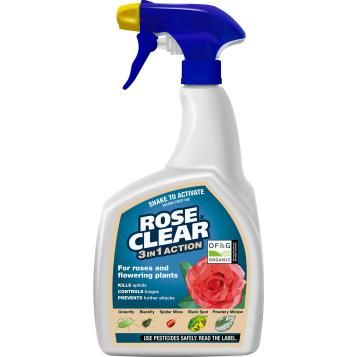
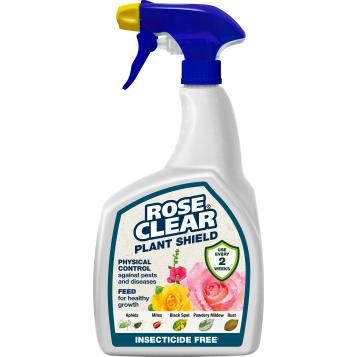
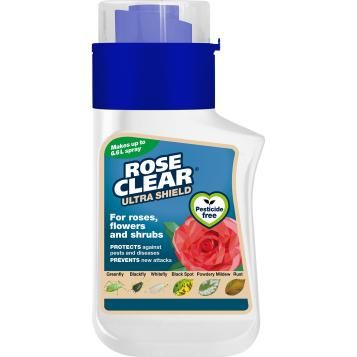
- Treat powdery mildew on roses by pruning out infected stems and, if the rose is also infested with bugs such as aphids, spray with a rose mildew treatment such as a combined insecticide and fungicide. To protect bees and pollinating insects do not apply to plants when in flower. Do not use where bees are actively foraging. Do not apply when flowering weeds are present.
How to prevent powdery mildew?
Powdery mildew prevention involves good garden hygiene and a bit of research before you buy new plants:
- Keep plants adequately watered and maintain moisture around the root system by mulching plants well early in the year to help water retention – powdery mildews thrive when the plant is not receiving enough water.
- Powdery mildew fungus spores spread by water or rain splashes. It’s a good idea not to water from above, but to direct the hose or watering can onto the soil at the base of the plant.
- Avoid buying powdery mildew susceptible apple trees. Choose a variety which is described as showing powdery mildew resistance, such as ‘Discovery’, ‘Greensleeves’ and ‘Worcester Pearmain’.
- Choose disease resistant rose varieties - the hollyhock species Althaea rosea is said to be less prone to powdery mildew.
- To control powdery mildew on courgettes, cucumbers, squash and pumpkins, leave enough space between plants when planting these crops. You should also do this with strawberries which are prone to powdery mildew.