Delicious in pies, soups and stews, and full of vitamins and minerals, pumpkins are a tasty autumn and winter treat. Follow our simple guide to growing pumpkins for a bumper harvest.
Choosing the best pumpkins to grow
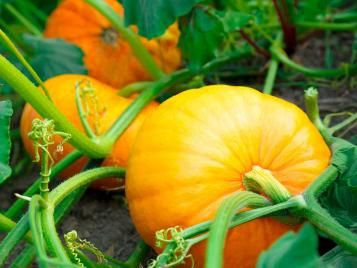
Pumpkins (botanical name Cucurbita pepo) belong to the same family as squash. There’s a wide range of different pumpkins available, from the huge ‘Dill’s Atlantic Giant’, which can produce fruits weighing up to 800kg (around 1750lb) to the tiny ‘Jack Be Little’ which bears miniature pumpkins just 7cm (3") across.
Most pumpkins need space, but if you don’t have a big garden, you can grow smaller varieties as climbers. And if you want a change from the traditional orange-skinned pumpkin, there are pumpkins with striped, knobbly or pleated skins, and even white or blue pumpkins. It’s safe to say, there’s a pumpkin for every taste! Here are few to look out for:
- Pumpkin ‘Evergold’ – the classic pumpkin, perfect for both cooking and carving.
- Pumpkin ‘Becky’ – smooth orange fruits around 20cm (10in) across, with very tasty flesh.
- Pumpkin ‘Munchkin’ – a small variety producing fruits with attractive pleated orange skins.
- Pumpkin ‘Queensland Blue’ – an unusual variety with blue-green skin and rich, sweet orange flesh.
Your essential equipment list for growing pumpkins
Here’s what you’ll need for growing perfect pumpkins in your garden.
For seed sowing:
- 9cm pots
- Seed compost such as Levington Seed & Cutting Compost
- Labels
- Propagator or clear plastic bags
For planting out:
- Compost or farmyard manure
- Spade
- Slate tiles or bricks
For growing pumpkins as climbers:
- Wooden poles, around 2m (6.5ft) long
- String
How to grow pumpkins from seed
Sow pumpkin seeds indoors early in the year, in mid to late April, as the plants have a long growing season.
- Fill individual 9cm pots with seed compost.
- Plant the seeds 2.5cm (1in) deep, on their sides.
- Water the pots and place them in a propagator or in clear plastic bags in a well-lit position at a temperature of around 20°C (68°F). The seeds should germinate in around five to seven days.
- After germination, take the pots out of the propagator or plastic bag and let the seedlings grow on in a greenhouse or on a sunny windowsill until they are large enough to be planted out.
How to plant pumpkins
Sowing seeds: Indoors from mid to late April, or outdoors from late May to early June.
Planting out seedlings: Plant seedlings outdoors in late May or early June.
Position: Plant in a sunny, sheltered position in well-drained soil.
Spacing: 2-3m (6.5-10ft) between plants and between rows.
How to plant pumpkin seedlings:
- A few weeks before planting, dig a hole for each plant, approximately 20cm (10") square x 20cm (10") deep.
- Fill each hole with compost or well-rotted farmyard manure.
- Harden seedlings off for a week before planting, by placing the pots outside during the day and bringing them back in again at night.
- Plant one seedling in each planting pocket. Firm the soil around the plant and water well.
Tips for pumpkin care
Caring for your pumpkins is essential as they grow. Water your pumpkins thoroughly once a week. In very hot, dry weather, increase this to twice a week. Always water the soil, not the leaves, to reduce the risk of fungal disease.
If you’re growing pumpkins as climbers, tie the trailing stems to the support poles as they grow.
When fruits start to develop, feed the plants fortnightly with a high potassium liquid feed (tomato feed is ideal). Slide a piece of slate under each pumpkin or place them on bricks to keep them off damp ground and protect them from slugs and rot. Pumpkin plants will usually produce two to three fruits per plant, although the smaller varieties can produce more.
When to plant pumpkin seeds
Sow pumpkin seeds indoors in mid-April for a longer growing season. Sow directly outdoors late May to early June.
Best varieties to grow:
- Pumpkin ‘Crown Prince’ – good for UK climate
- Pumpkin ‘Jack Be Little ‘– ideal for small gardens
- Butternut ‘Hunter’ – fast-maturing, good for northern UK summers
When to harvest pumpkins
Pumpkins can be harvested from September until the first frosts. To tell whether a pumpkin is ripe, look for these signs:
- A tough skin, strong enough to resist puncture by a fingernail
- A deep, rich skin colour
- The stem attached to the pumpkin has hardened
- The pumpkin sounds hollow when tapped.
Key steps for harvesting pumpkins
- Leave the fruits to ripen on the plants as long as possible for the best flavour. If there’s a risk of early frosts, protect the pumpkins with cardboard and straw.
- Use secateurs to cut pumpkins off the vine, leaving a long stalk on the fruit.
- Before storing pumpkins, first cure the skins by leaving the fruits out in the sun for around 10 days. In poor weather, place them in a greenhouse, or on a sunny windowsill.
- Once the skins have cured, store the pumpkins in a well-ventilated, cool room, at a temperature of around 7-10°C (44-50°F). Check periodically for any signs of rot and remove any affected fruits. Stored pumpkins can last for up to six months.
Potential pumpkin problems
Pumpkins can be affected by powdery mildew, a fungal disease that leaves white powdery markings on the leaves, and in heavy cases can stunt the plants’ growth. Drought makes plants more susceptible to powdery mildew, so reduce the risk of infection by watering regularly, and avoid wetting leaves when watering. Remove and dispose of any affected leaves as soon as you see them.
In cool weather, fruits sometimes fail to develop, or drop off the plant while small. This is due to the flowers not being pollinated. Once the weather warms up, the problem usually resolves.
Key features of pumpkins
| Flowering season(s) | Summer, Autumn |
|---|---|
| Foliage season(s) | Spring, Summer, Autumn |
| Sunlight | Full sun |
| Soil type | Clay, Loamy |
| Soil pH | Neutral |
| Soil moisture | Moist but well-drained |
| Ultimate height | Up to 45cm (18in) |
| Ultimate spread | Up to 3m (10ft) |
| Time to ultimate height | 4 months |