
How to get rid of plantain
How to get rid of plantain
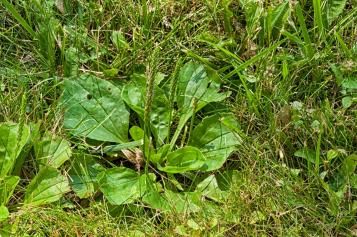
Plantain, also known as lamb’s tongue, is a tough, fast-spreading weed that can quickly take over your lawn, smothering other plants and leaving your turf worse for wear. A single plant can produce up to 20,000 seeds, making it hard to control once it's gained a foothold, and its low-growing rosette shape means it's also resistant to your mower. Thankfully, with the right approach, it's easy to keep under control. Here's how to identify, prevent, and bring plantain under control and reduce the chance of it returning.
What does a plantain plant look like?
Despite sharing a name, weed plantain is completely unrelated to the banana-like fruit. There are two common types found in Australian lawns - greater plantain and ribwort plantain - both tough, highly adaptable perennial broadleaf weeds with a remarkably short growing period, taking as little as six weeks from germination to setting seed.
While greater plantain and ribwort plantain have plenty in common, each has its own distinctive look.
Greater plantain
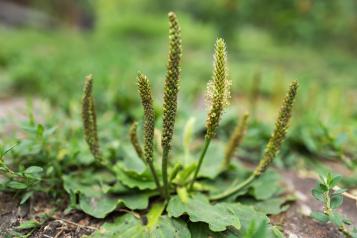
Greater plantain grows in low rosettes of rounded leaves, reaching up to 20cm long and 10cm across. The leaves are smooth with prominent veins running from the base along their length, and sometimes carry a fine covering of hairs on the surface.
Thin, upright stems shoot up cone-shaped flowerheads packed with small, greenish-white flowers. These later turn into small seedpods, each holding up to 20 seeds, which split open once mature to scatter their seeds on the ground.
Plantain can develop a substantial root system, including fibrous roots and a short taproot or rootstock. Loosen the surrounding soil before lifting the entire crown and as much of the root system as possible.
Ribwort plantain
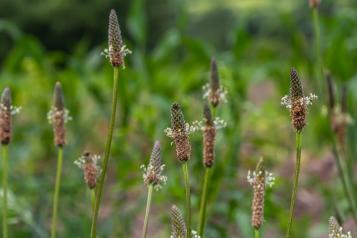
Ribwort plantain has long, narrow leaves, anywhere from 10 to 30cm long, with stems topped by quirky "bobble" flowerheads made up of small, greenish-white flowers. These also turn into seedpods, each producing around 10 to 20 seeds.
Like greater plantain, ribwort plantain also has a shallow, fibrous root system that sits close to the soil surface.
Why is plantain a problem?
A single plantain plant can produce up to 20,000 seeds, easily spread by birds, wind, and water. This makes it an aggressive spreader that can quickly take over your lawn. Once it's gained a foothold, it outcompetes your lawn grass and other plants for nutrients and water, smothering everything in its path. Its bright green, ribbed leaves also have a different colour and texture to your lawn grass, disrupting the uniform look of a well-maintained lawn, and because it weakens your turf, it can leave you with bare, thin patches too.
Plantain can also be tricky to control, since it grows in flat rosettes that sit below the reach of your lawnmower blades. That means getting rid of it isn't as simple as a once-over with the mower.
And if you suffer from hayfever, plantain is bad news. It produces a lot of pollen, which can leave you with itchy eyes and a runny nose.
Why is plantain growing in your yard?
Plantain thrives in poorly established or unhealthy lawns, especially those with bare patches or thinning areas that it can take advantage of.
It’s not a fussy plant either, and can grow just about anywhere, including in moist, compacted soils. That’s why you might notice it popping up in heavily trafficked areas of your yard. Its presence can also be a sign your soil has poor drainage.
It spreads easily too, with each plant dropping thousands of seeds. These can attach themselves to animals, tools, and mowers, or simply blow in on the wind.
How to prevent plantain
Regular lawn maintenance will help prevent plantains by promoting the growth of strong healthy turf. Here’s how to keep plantain out of your yard:
1. Aerate your soil
Plantain thrives in compacted soil, often faring much better than your turf grass, which can struggle in poor soil conditions. Aerate your lawn annually to improve drainage and allow air, water and nutrients to reach the roots of your grass. To aerate your lawn, poke holes in the surface with a garden fork or hollow tine aerator. The best time to aerate is spring, when soil is moist and the lawn has plenty of growing time to recover.
2. Feed your lawn with a high-quality fertiliser
Feed lawns in spring and autumn to promote the growth of healthy turf, which will crowd out plantains and other lawn weeds. We recommend a high-quality liquid feed like Scotts Lawn Builder™ 3in1 Weed, Feed & Green Up Liquid Lawn Fertiliser or a granular one like Scotts Lawn Builder™ All Lawn Types Lawn Food, 4KG | Love The Garden.
3. Minimise bare patches of lawn
Plantain thrives in unhealthy lawns with thin, patchy areas it can take advantage of. To maintain a thick healthy lawn that can outcompete invading plantain, fill in any gaps with a product like Scotts Lawn Builder™ Lawn Thickener Lawn Seed.
4. Raise your mower
Sadly, your mower isn’t going to be too much help in getting rid of plantain. Its low-growing rosettes are too low for the mower blades to reach. But it’s still a good idea to mow your lawn regularly. Mowing encourages thick, healthy lawn that better competes with weeds. Just make sure to mow at the recommended height for your turf type. Taller grass shades plantain, starving it of the sunlight it needs to grow.
5. Mulch garden beds
Add a thick layer of mulch around your garden beds. Mulch helps suppress plantain seedlings by limiting light at the soil surface. As a bonus, it’ll also help your soil retain moisture.
6. Use a post-emergent herbicide
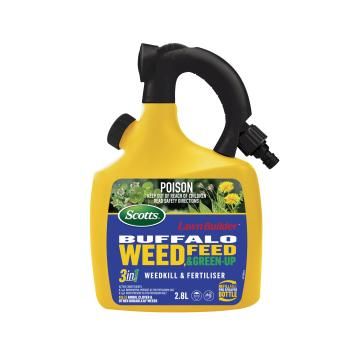
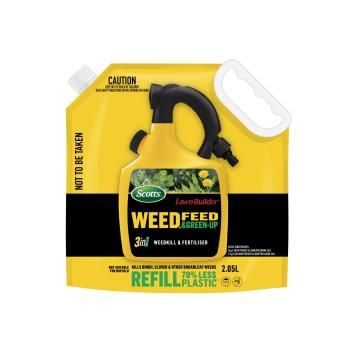
Post-emergent herbicides can help control established weeds like plantain once they are actively growing in the lawn. For most lawn types, we recommend a product like Scotts Lawn Builder™ Weed, Feed & Green Up Liquid Lawn Fertiliser. It’s designed to help control weeds without harming your lawn grass or other plants. If you have buffalo grass though, use a product like Scotts Lawn Builder™ Buffalo Weed, Feed & Green Up Liquid Lawn Fertiliser instead. Both products include fertiliser to give your lawn an extra boost of nutrients.
How to get rid of plantain
The best defence against plantain is a healthy lawn that can naturally outcompete weeds. But if you’ve already spotted some weeds popping up, you’ve got a few options, depending on the size of the infestation.
1. Dig out small infestations
Plantains have shallow roots and are pretty easy to dig up by hand. In borders, use a hoe to cut plantains off at the roots, just below ground level. For lawns, dig out individual plantains using a knife or daisy grubber.
Once you’ve dug out the plantain, fill in any bare patches by top dressing with a product like Scotts Lawn Builder™ + Organics Lawn Topdress Mix and Underlay Soil and reseeding with Scotts Lawn Builder™ Lawn Thickener Lawn Seed.
2. Use a weedkiller
In lawns heavily infested with plantain, it may be more effective to use a hose-on all lawn weedkiller. We recommend a selective weedkiller like Scotts Lawn Builder™ Bindii Weedkiller. The treatment controls the broadleaf weeds listed on its label, including plantain, without harming your lawn grass. It’s been developed specifically for all lawns, including buffalo. Its hose-on Pro-Sprayer bottle makes it simple to cover your entire lawn, so you can tackle all your broadleaf weeds in one go. The product also contains fertiliser to help your lawn bounce back. You can spray at any time of the year when plantain is actively growing - we recommend autumn or spring.
Recommended Articles
Recommended Products
FAQs
What kills Plantain?
The best way to get rid of plantain is with a selective broadleaf weedkiller. Another way to remove plantain is to pull it by hand. The best way to prevent plantain is with a healthy thick lawn that naturally resists weeds.
Why is plantain a problem?
Plantain is a problem because it outcompetes desirable plants and lawn grass for nutrients, water and sunlight, leading to an unhealthy lawn. It’s also an aggressive spreader and can quickly take over lawns.
When should you spray plantain?
The best time to spray plantain is when the plant is actively growing, from autumn through to spring.
Why is plantain so hard to get rid of?
Plantain grows in low, flat rosettes that sit below the reach of most mower blades, so regular mowing won’t help control it. It also produces thousands of seeds per plant, that are easily spread by wind, water and animals.
Can I pull plantain by hand?
Young plants may be removed by hand when the soil is moist, taking care to remove the crown and root system.


