Thistle weed control: how to remove thistles
Thistle weed control: how to remove thistles
Thistle is a group of aggressive, spiny, fast-spreading weeds that don't waste any time making themselves at home. Whether it's common sowthistle or scotch thistle you're dealing with, seeds can blow in on the wind, settle into your lawn and garden beds, and quickly take over, smothering plants and leaving your backyard worse for wear. Thankfully, with the right approach, thistle is easy to keep under control. Here's how to identify, prevent, bring thistles under control and reduce further spread.
What are thistles?
There are many types of thistle, but the two you’re most likely to come across in your yard are common sowthistle and scotch thistle - both are tough, fast-spreading, broadleaf weeds with distinctive foliage and flower heads.
While common sowthistle and scotch thistle have plenty in common, each has its own distinctive characteristics.
Common sowthistle
Common sowthistle is an annual or short-lived perennial weed. It grows soft, lobed or toothed basal leaves up to 30cm long, forming a low rosette shape close to the ground.
From there, thin, upright, hollow stems shoot up to 1m tall, leaking a milky sap if broken, which is where the name "milk thistle" comes from. Underground, the plant relies on a single taproot that grows deep into the earth, which can make it a little tricky to pull out cleanly by hand.
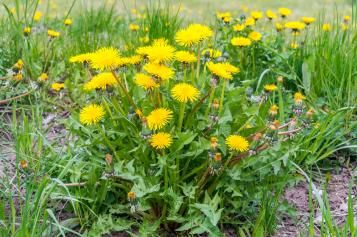
Its flowers are yellow and look a lot like at first glance, though sowthistle flowers grow in clusters rather than one to a stem like dandelions do. These later give way to puffy, parachute-like seed heads, similar to a dandelion's fluffy seed head, that blow away in the wind. The plant typically flowers in spring, and dies back in summer. at first glance, though sowthistle flowers grow in clusters rather than one to a stem like dandelions do. These later give way to puffy, parachute-like seed heads, similar to a dandelion's fluffy seed head, that blow away in the wind. The plant typically flowers in spring, and dies back in summer.
Scotch thistle
Scotch thistle is a large annual or biennial weed that can grow up to 2 metres tall. It starts out as a flat rosette of large leaves, which can reach up to 50cm in diameter. These leaves are toothed or lobed with spiny edges, and covered in thousands of tiny white hairs that give the plant a silvery-grey look.
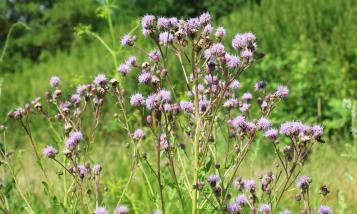
But it's the flowers that really stand out. Scotch thistle produces fluffy round flower heads up to 8cm in diameter, packed with vibrant pink or purple florets ringed by spikes. Each flower produces just one seed.
Like common sowthistle, scotch thistle also relies on a single taproot that extends deep into the ground.
Why is thistle a problem?
Thistle is an aggressive spreader. A single sowthistle plant can drop up to 8,000 seeds, while scotch thistle can produce as many as 20,000 over its lifetime! Their hairy seeds spread easily via birds, yard equipment, or wind, and have even been known to survive in the digestive tracts of animals. They can also lie dormant in the soil for decades before germinating and re-emerging when conditions are right. Left unchecked, thistle can quickly take over your lawn, crowding out your grass and other plants for nutrients and water, and leaving bare, thin patches behind. And if that weren't bad enough, thistle's sharp, spiky spines can give pets and people a nasty prick too.
Some thistles are declared weeds in particular jurisdictions, thanks to the damage they can do to farmland and the environment. So depending on where you live, you might be legally required to get rid of it.
Why is thistle growing in your yard?
Both scotch thistle and common sowthistle spread by seed, either by hitching a ride on people, pets, and equipment, or getting carried into your yard on the wind from neighbouring areas.
Once it's found a way in, thistle thrives in unhealthy lawns, often taking hold in bare patches or thinning areas. It's not a fussy plant and can tolerate most soil types, but it tends to favour well-drained, fertile, disturbed soil - think nature strips, farmland, freshly dug garden beds, or the edges of your yard.
How to prevent thistles
A strong turf is an important defence against thistle, but minimising the spread of seeds is also a good idea. Here’s how to keep thistle out of your yard:
1. Kill thistles on sight
As soon as you notice a thistle plant popping up, kill it by either removing by hand or spraying with a herbicide. Try to get to it before it flowers and goes to seed, which is typically late spring and summer for scotch thistle, and spring for common sowthistle.
2. Don’t carry seeds in
Thistle doesn’t need any extra help spreading to your yard. If you’ve been moving through or working in an infested area, check your clothes, shoes, and equipment and clean or brush off any seeds you find. It’s also worth having a chat with your neighbours and asking them to remove any plants they find, since seeds can blow in from neighbouring yards.
3. Feed your lawn with a high-quality fertiliser
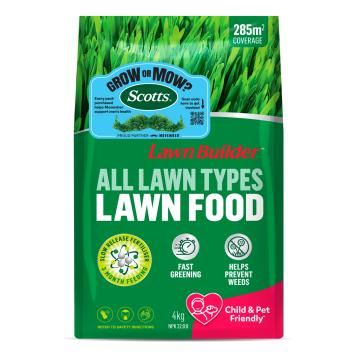
Feed lawns twice a year (usually in spring and autumn) to promote the growth of healthy turf. A thick, healthy lawn will naturally crowd out thistle. Use a high-quality liquid feed like Scotts Lawn Builder™ 3in1 Weed, Feed & Green Up Liquid Lawn Fertiliser or a granular one like Scotts Lawn Builder™ All Lawn Types Lawn Food, 4KG | Love The Garden.
4. Minimise bare patches of lawn
Minimise bare patches in your lawn that thistle can take advantage of. To fill in any gaps, overseed with a product like Scotts Lawn Builder™ Lawn Thickener Lawn Seed. The product contains grass seed and fertiliser to thicken lawns.
5. Raise your mower
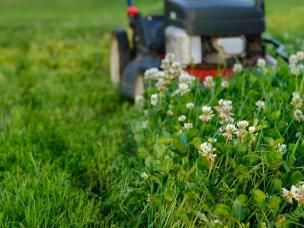
Regular mowing is key to a thick, healthy lawn that can outcompete weeds, but we recommend mowing at the recommended height for your turf type and avoiding scalping. Taller grass shades thistle, blocking it from the sunlight, nutrients, and water it needs to grow.
6. Mulch garden beds
Add a thick layer of mulch to your garden beds. Mulch helps your garden beds retain moisture and keeps plants cool during heatwaves. It also blocks sunlight from reaching the soil surface, smothering weeds and stopping thistle from germinating in the first place.
7. Control thistles early and keep your lawn healthy
Treat thistles while they are young and actively growing, before they have a chance to flower and produce seed. Scotts Lawn Builder™ Weed, Feed & Green Up Liquid Lawn Fertiliser controls listed broadleaf weeds while feeding and thickening compatible lawns. For buffalo lawns, use Scotts Lawn Builder™ Buffalo Weed, Feed & Green Up Liquid Lawn Fertiliser, which lists thistles among the weeds controlled, and always follow the pack directions.
How to get rid of thistles
If you’ve spotted some patches of thistle, you’ve got a few options, depending on the size of the problem.
1. Dig out (or spot spray) small infestations
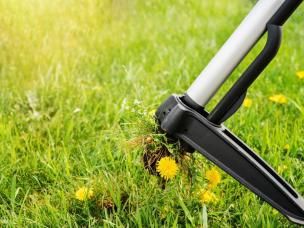
Thistle can be a little tricky to remove by hand. Not only is it very spiky, but it also has a thick taproot that grows deep into the ground, anchoring the plant firmly in place. If you’ve noticed individual plants in garden beds or on your lawn, you can spot spray with a weedkiller, or pull them carefully by hand. Just make sure to remove the entire taproot - leaving any fragments behind can see the plant resprout. It’s a good idea to hand-weed after rain when the soil is soft.
Once you’ve dug out weeds from your lawn, fill in any bare patches with Scotts Lawn Builder™ + Organics Lawn Topdress Mix and Underlay Soil and Scotts Lawn Builder™ Lawn Thickener Lawn Seed.
2. Mow
For larger patches of thistle on your lawn, a once-over with a mower can stop flowers from sprouting and going to seed. You’ll need mow before seed set as often as needed for the lawn and thistle growth, without scalping the turf. Repeated cutting can reduce flowering and weaken some thistles, but regrowth should be monitored and treated before seed set.
3. Use a weedkiller
To control thistle in your lawn, use a product like Scotts Lawn Builder™ Bindii Weedkiller. You can spray your entire lawn with the treatment, which is formulated to kill the broadleaf weeds listed on the label, without harming your grass. It’s suited to all lawns, including buffalo, and its hose-on Pro-Sprayer bottle makes it easy to cover your entire lawn. The product also contains fertiliser for an extra boost of nutrients.
FAQs
What kills thistles but not grass?
The best weed killer for thistle that won’t harm grass is a selective broadleaf herbicide formulated for your lawn type. Selective herbicides are designed to kill broadleaf weeds like thistle without harming grass and other plants.
Why is thistle a problem?
Thistle is a problem because it outcompetes desirable plants and lawn grass for nutrients, water and sunlight. It’s also an aggressive spreader and can quickly take over lawns and garden beds. It’s considered a noxious weed in many states due to its impact on agriculture and the environment.
When should you spray thistle?
The best time to spray thistle is when the plant is actively growing, from spring through to summer.
Why is thistle so hard to get rid of?
Thistle is hard to get rid of because it produces thousands of seeds per plant. Seeds are easily spread by wind, water and animals, and can lie dormant in the soil for decades before re-emerging.