How to get rid of winter grass weed
How to get rid of winter grass weed
Winter grass can blend into the lawn at first, but its pale green clumps and noticeable seed heads soon stand out. Also known as Poa annua, this grassy weed can leave bare patches when plants die back. The good news is that with the right approach, winter grass is entirely manageable. Here's how to identify, prevent, and get rid of winter grass for good.
What is winter grass?
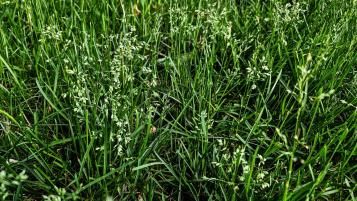
Winter grass (also known by its botanical name Poa annua or simply Poa) is an annual low-growing weed you’ll likely recognise by its light green colour - it’s easy to mistake it for regular lawn grass at first glance. Its leaves are short, flat and soft, with blunted tips, and the plant tends to grow in clumps, sending up tufts of lush growth.
Winter grass is most noticeable through the cooler months, although its timing varies with local conditions. It's a fast grower that spreads its seeds prolifically, allowing it to establish aggressively across lawns.
Given the right conditions, winter grass can flower all year round too, although it's most active in winter and spring. Look out for grey-green flowers, sometimes with a slight purple tinge, clustered at the tip of the plant's branches in a triangular shape. Once the flowers mature, they produce fluffy seed heads that sit atop the ends of the weed’s Christmas tree-like branches.
Stems can grow up to 30cm in height, although in a well-tended lawn they’ll be much shorter than this from regular mowing. The stem has a noticeable flattened sheath around it.
Underground, the plant has shallow, fibrous roots that lift easily from the soil. Unlike other lawn grasses, winter grass doesn’t spread via stolons or runners, so it’s easy to pull by hand.
Why is winter grass a problem?
While winter grass can pass for regular grass at first glance, it gives itself away by putting up flowers and seedheads - a look that quickly undoes the neat and tidy lawn you’ve been working hard on.
But it’s what winter grass is doing to the health of your lawn that’s the real problem. Like most weeds, winter grass competes with your turf for food and water, and if left unchecked, can outcompete your lawn grass once it reaches its full strength. But unlike lawn grass, it has a short lifecycle, so when the clumps of winter grass die off, it leaves behind unsightly brown or bare patches. The result can be an uneven lawn with thin or bare patches.
Why is winter grass growing in your yard?
Winter grass is an incredibly common problem in Australian lawns. While it grows year round, it tends to thrive in cooler, wetter conditions, which is why you’ll notice it more in autumn and winter (it germinates when soil temperature drops to around 16-17°C). Winter grass can take advantage of cool, moist conditions when some warm-season lawns are growing more slowly.
The spread of winter grass is also a good indicator of your lawn's overall health. It tends to thrive in lawns that are already struggling, particularly those with thinning grass, bare patches or compacted soil. Once winter grass has established itself, it wastes no time producing seed heads and spreading aggressively.
How to prevent winter grass weed
All lawns are better able to fend off weeds when they’re well looked after. Here’s how to prevent winter grass with a thick, lush, healthy lawn:
1. Feed your lawn with a high-quality fertiliser
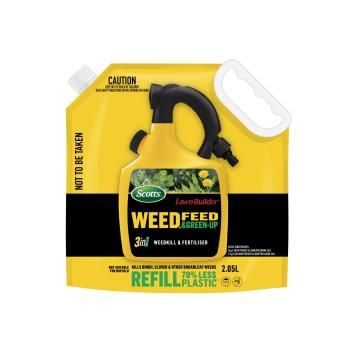
Feed your lawn so that it’s healthy enough to outcompete winter grass. Use Scotts® EasyGreen Broadcast Fertiliser Spreader to evenly spread granular feed over your lawn, such as Scotts Lawn Builder™ All Lawn Types Lawn Food. Or apply a liquid product such as Scotts Lawn Builder™ 3in1 Weed, Feed & Green Up Liquid Lawn Fertiliser.
2. Minimise bare patches of lawn
Winter grass is an opportunistic weed that takes advantage of thin or patchy lawn. Use a product like Scotts Lawn Builder™ Lawn Thickener Lawn Seed to encourage thick, healthy lawn that can outcompete invading winter grass.
3. Collect grass clippings
When mowing your turf, be sure to collect any clippings so that you don’t leave seeds behind to germinate.
4. Let your lawn dry out
Avoid overwatering and water according to your lawn type, soil and weather conditions. Reducing shade and increasing exposure to sun will also help other grasses to thrive - winter grass struggles more than most when the soil begins to dry out.
5. Aerate your soil
Winter grass can be a sign of compacted soil. To aerate your soil, use a garden fork or aerator to poke holes into the lawn surface. This will alleviate compaction and allow air, water and nutrients to reach your turf grass’s roots.
6. Use a pre-emergent herbicide
A suitable pre-emergent herbicide may help prevent winter grass seed from establishing when applied at the correct time. Choose a product labelled for winter grass and your lawn type. For most lawn types, you can’t go wrong with Scotts Lawn Builder™ Weed, Feed & Green Up Liquid Lawn Fertiliser, but for buffalo lawns, use a product like Scotts Lawn Builder™ Buffalo Weed, Feed & Green Up Liquid Lawn Fertiliser. Using a weedkiller with added fertiliser gives your lawn an extra boost of nutrients to help it bounce back faster.
How to get rid of winter grass
While the best defence is a thick, healthy lawn, if winter grass has already made itself at home in your lawn, you can tackle it with a hands-on approach. Winter grass has a short lifecycle. It germinates, grows, flowers, and produces new seed rapidly, so the key to killing it is to disrupt that lifecycle before it can repeat. Monitor the lawn through the cooler months and act before seed heads mature.
1. Hand weed
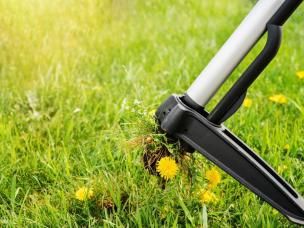
Mowing alone will not remove established winter grass, particularly where low seed heads escape the mower. A hand fork makes light work of loosening and lifting individual plants, which should pull up easily from the soil. Remove winter grass and get rid of the clumps as you go, but avoid composting them - the seeds can survive and will germinate again.
Once you’ve dug out the individual weeds, top dress your lawn to even out the surface, then reseed. Use Scotts Lawn Builder Top Dress 25L, followed by Scotts Lawn Builder™ Seed & Feed Sun & Shade Lawn Seed or Scotts Lawn Builder™ Lawn Thickener Lawn Seed.
Make sure to also check flower beds, borders, and cracks in paths or patios for more plants, as they’ll produce seed too. Pull these by hand, or use a hoe to sever the green growth from the roots.
2. Use a weed killer
Unfortunately, weed killer is rarely effective against winter grass - most widely-available commercial products are designed to target broadleaf weeds, and winter grass isn't one. Some herbicides do target non-broadleaf weeds like winter grass, but read the label carefully to be sure.
To get rid of poa annua, a pre-emergent herbicide that prevents seeds from germinating in the first place is a more effective solution. After treating with weedkiller, repair bare spots in the lawn with Scotts Lawn Builder™ Patch Magic.
FAQs
Should you pull out winter grass?
Yes, winter grass doesn’t spread via runners, so it’s easy to pull by hand. This is one of the most effective methods of keeping it under control. Pull the entire clump and dispose of the plant - avoid composting the plant as seeds will survive and germinate.
What kills winter grass in Australia?
The key to killing winter grass is to disrupt the plant's life cycle before it can spread its seeds. Weed killers alone aren't especially effective, as most commercial products are designed to target broadleaf weeds, and winter grass isn't one. A pre-emergent herbicide that prevents winter grass from germinating in the first place is a more effective solution. Hand weeding is another reliable way to keep winter grass under control.
Does winter grass grow all year round?
Yes, winter grass grows year-round, but it tends to thrive in cooler, wetter conditions, which is why you’ll notice it more in autumn and winter. Winter grass germinates when soil temperature drops to around 16-17 degrees celsius.
Will winter grass die on its own?
Yes, winter grass has a short lifecycle and typically dies off as temperatures warm up. However, by then it's usually already dropped thousands of seeds, so it'll be back the following season unless you break the cycle.
What time of year should you treat winter grass?
Apply a suitable pre-emergent product before the main germination period, following the label and local conditions. Hand weeding can be done any time you spot it, but winter grass needs to be tackled year round to really stay on top of it.