
How to remove giant hogweed
Giant hogweed can be an impressive sight when fully grown — indeed, it can grow to as much as five metres in height! However, having giant hogweed in your garden isn’t as positive as you might think.
It’s a highly invasive species that can dominate its surroundings and crowd out your prized plants. What’s more, it can be extremely harmful to humans if not handled with care, and there can even be legal repercussions if it starts to spread too far.
Removing giant hogweed, carefully and responsibly, is therefore of paramount importance. This guide tells you all you need to know, including what hogweed looks like, how to deal with giant hogweed burns, and the best ways to approach giant hogweed treatment.
What is giant hogweed?
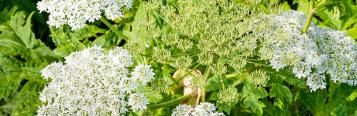
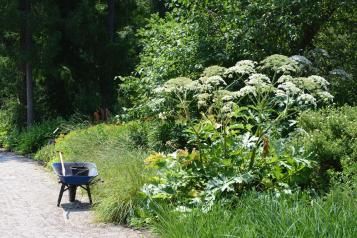
Giant Hogweed is a perennial plant which can grow up to 5m tall with dark green leaves, and has a white, umbrella-like head when flowering. Its seeds are very small and thin with brown stripes, while its taproot is pale and thick.
With its large, distinctive, cow-parsley-like appearance, you can’t miss this intrusive weed in your garden or when you’re out and about, particularly near rivers and waterways.
How to identify giant hogweed
When fully grown (as in the picture above), giant hogweed is very distinctive and easy to spot. However, when it’s growing, it may look more like other types of hogweed (which is smaller and has rounder leaves), or cow parsley (which looks more like a fern and tends to flower earlier than giant hogweed).
Why is it important to remove giant hogweed?
Giant hogweed doesn’t just grow to a huge size, but as a species, it can expand its footprint very quickly. This is partly thanks to its enormous seed count (up to 50,000 per plant), but also as the seeds can be carried substantial distances by the wind, along waterways like rivers and streams, and even when stuck to the shoes of walkers and runners.
This level of invasiveness is a problem because giant hogweed is potentially harmful to humans. Chemicals in the sap can cause photodermatitis or photosensitivity, where the skin becomes very sensitive to sunlight and may suffer blistering, pigmentation and long-lasting scars. Reactions can occur within 15 minutes of skin making contact, and while the sensitivity to light starts to recede after a couple of hours, the affected area can remain inflamed for several days. If the sap comes into contact with the eyes, it can even cause blindness.
For both these reasons, there are strict legal protections in place around giant hogweed. While growing it on your own land is not illegal if you keep its growth under control, you should make sure it doesn’t extend outside of land you own. If you are not controlling giant hogweed, you may be subject to a species control agreement and/or a community protection notice. Potential punishments including covering the costs of controlling the giant hogweed, fines, and in serious cases, imprisonment.
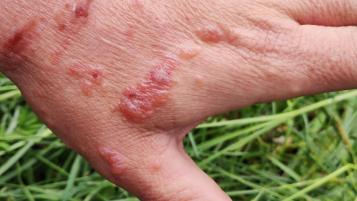
How to treat giant hogweed burns
If you do get giant hogweed sap on your skin, be sure to wash the area thoroughly as soon as possible, and keep the area protected from sunlight for a few days — any exposure to sunlight can make the burns much worse. Keep a close eye on the affected area in case any delayed reactions emerge, and don’t burst any of the blisters. Make sure that any of the clothes you were wearing at the time of contact are thoroughly washed as soon as possible.
If you have any concerns about your symptoms, have extensive blistering, or are finding things particularly painful, then seek professional advice from your GP, or at accident and emergency if the case is especially serious.
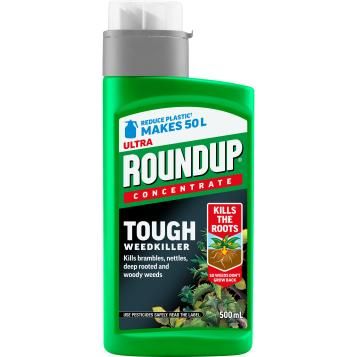
Using weedkiller on giant hogweed
Weedkiller will be most effective on young giant hogweed foliage before it flowers in April or May, and new seedlings or any re-growth should be treated in August or September, if necessary. Continue to monitor the site each spring and treat new seedlings, which can continue to emerge from seeds for up to ten years.
When treating giant hogweed, make sure you do so on an overcast day. Ensure you always wear gloves, cover your arms and legs, wear closed footwear and a facemask. And once you’ve finished, make sure that all the clothes you’ve worn and all the tools you’ve used are washed thoroughly, however likely they might have been to come into contact with the sap.
Disposing of giant hogweed
Giant hogweed is a controlled waste (similar to Japanese knotweed), which means there are stringent regulations in place regarding removal and destruction. This means measures far beyond those you would use for other types of weeds. Giant hogweed, or any soil that might have been in contact with its roots of seeds, should never be disposed of via household waste bins, council green waste bins, or home composting.
Ideally, giant hogweed should be destroyed on-site by weed removal specialists. If it’s taken off-site for disposal, then it should only be taken away by a registered waste carrier, and disposed of in licensed landfill sites, with full documentation sent to the Environment Agency to keep them informed. Look for confirmation of registered disposal sites and waste transfer permits of any contractors you intend to work with.
FAQs
How invasive can giant hogweed be?
In a word: extremely! Giant hogweed benefits from a combination of huge seed volumes that are easily transferable, high germination rates, and fast growth that allows the weed to out-compete other plants easily and very quickly.
What’s the difference between cow parsley vs hogweed?
While they might share some visual similarities, there are some key differences. Hogweeds are taller, have thicker and more bristly stems, and have larger and coarser leaves. Cow parsley plants are smaller with fern-like leaves, their flowers are smaller, and they bloom earlier (in the spring, whereas giant hogweed generally flowers in the early summer). And unlike hogweed, cow parsley isn’t harmful to humans.
When is the best time of year for giant hogweed removal?
As with many weeds, the earlier you can address giant hogweed, the easier it will be to remove because younger weeds will be smaller and won’t have an extensive root base to remove. Remember that regrowth from roots or from seedlings is likely in any environment where giant hogweed has grown, so expect to spray weedkiller over the affected area several times over a number of years, in spring and/or autumn.