
Our guide to caring for your Lavender
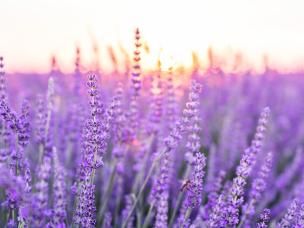
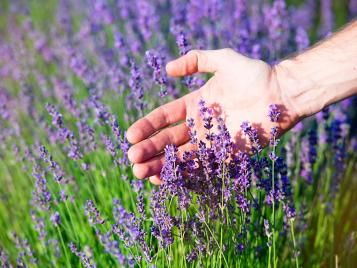
Lavender is a fabulous evergreen shrub and every garden should have some. It’s wonderfully colourful, with its silvery or grey-green, scented foliage and its spikes of colourful, fragrant flowers produced throughout the summer, from July to September.
The flowers are great for attracting all manner of wildlife - especially bees and butterflies. Lavender is very versatile too. The taller varieties can be used as formal hedging plants, and the dwarf, more compact varieties can be used as short hedging or edging around beds and borders. And lavender grows very well in containers.
How to grow lavender
Cultivating lavender
Lavender is easy to grow and look after. It needs a well-drained soil and a sunny position. The sunnier the site, the stronger the fragrance from both the foliage and the flowers.
Lavender varieties
Most of the lavenders we grow in our gardens are varieties of the English lavender, Lavandula angustifolia. This species can easily grow up to 1.5m (5ft) high and is a good choice for hedges. The lower growing, more compact varieties, like ‘Munstead’ and ‘Hidcote’, are the best choices for dwarf hedges and bed edging.
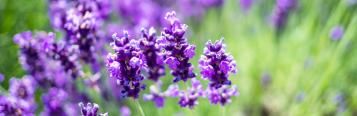
Although most varieties produce flowers that range from blue to purple, there are also white-flowered varieties, such as ‘Alba’, and those with pink flowers, ‘Rosea’.
French lavenders, Lavandula stoechas and Lavandula viridis, produce different flowers with showy bracts above the flowers, which leads to their sometimes used common name of ‘bunny ear lavender’. These lavenders aren’t as hardy as English lavender and will need a very warm position, excellent soil drainage and may even need winter protection in severe weather.
Where to plant lavender
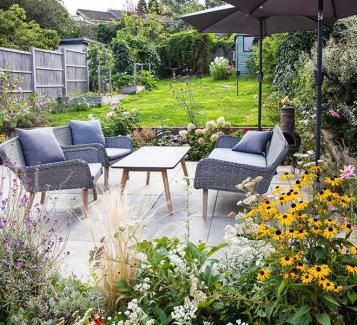
Plant lavender in flower borders and beds, patios, containers, city and courtyard gardens, hedges.
How to look after and care for lavender
Lavender is very drought tolerant, but like all other drought-tolerant plants needs watering until established.
Avoid feeding with high-nitrogen feeds, which encourages soft growth, so use a high potash plant food instead, which encourages flowering and strong, hardy growth.
Lavender care tips
Lavender can be quite a hardy plant that can look after itself to some extent, but there are still some things you can do (or should avoid doing) to promote the best possible health:
-
Don’t cut into old wood: cutting in as far as the lower stems hampers new shoot growth and can lead to branches drying out
-
Avoid overwatering: established lavender should only be watered if there’s a drought, although containered plants should be watered more regularly in light of smaller root networks
-
Feed minimally: lavender needs feeding very little, if at all, as its nutrient requirement from soil is relatively low
-
Deadhead late in the season: removing blooms in late summer strikes a balance between promoting new growth and enabling birds to feed
-
Shelter containered plants in winter: containers should be shielded from harsh winter weather, either by being put in a greenhouse, or by gaining natural shelter from an adjacent wall
Pruning lavender
Plants can tend to become leggy in time, so it is important to prune them annually to keep them bushy and full of flowers. It’s also a good idea to prune newly planted lavender plants to encourage strong, bushy growth.
Pruning lavender can be confusing, especially as there is lots of differing advice available! For best results, on established plants of English lavender, remove the faded flower stalks and about 2.5cm (1in) of the current year’s growth after flowering. You can also prune in April if you want to tidy up plants and encourage bushiness - you should do this using shears, rather than secateurs.
The less hardy French lavenders are best pruned in mid-spring or it can be pruned after the first flush of flowers.
Lavender does not shoot readily from old wood, so never prune old, brown, leafless stems - otherwise the plant will die. Old, neglected plants are best replaced. Annual pruning should help prevent this happening.
Lavender growing conditions
Lavender can grow all year round, but for the best possible plant growth and flowering, it’s important to understand the influence of key conditions such as sunlight, soil type and pH, and levels of moisture. This table gives you the key facts around optimum lavender growing conditions:
Lavender pests
Lavender may be susceptible to the following pests, diseases and problems: Rosemary beetle, Root rot.
| Flowering season(s) | Summer |
|---|---|
| Foliage season(s) | Spring, Summer, Autumn, Winter |
| Sunlight | Full sun |
| Soil type | Chalky, Loamy, Sandy |
| Soil pH | Neutral/alkaline |
| Soil moisture | Well-drained |
| Ultimate height | Up to 80cm (31in) depending on variety |
| Ultimate spread | 30cm (12in) |
| Time to ultimate height | 3-4 months |
Is lavender evergreen?
Yes, most commonly-grown lavenders in the UK are evergreen, although its ability to thrive through the winter months depends on the climate. In warmer winter weather, it can retain its bright foliage all year round, but in more temperate weather (such as that found in most of the UK), it will die back to a certain extent before flowering again in the spring.