
What are leatherjackets?
Leatherjacket bugs are large grubs that eat plant roots. As they spend the majority of their life underground, they are rarely seen in the flesh - but signs of their damage are.
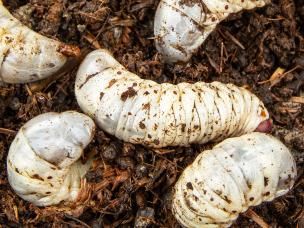
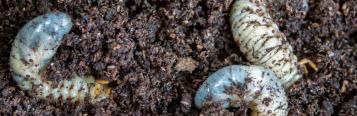
Leatherjacket bugs are lengthy (up to 50mm), legless, seemingly headless, grey-brown wiggling tubes. They grow up to become daddy-long-legs (or more correctly, crane flies). They live underground and attack the roots of plants and root vegetables in flower beds and borders. More frequently they attack lawns, eating the roots of the grass.
Symptoms
In flower beds, plants will wilt and rapidly collapse. In lawns, yellowy-brown patches will appear in early to mid-summer as the rootless grass dies. Leatherjacket bugs are juicy treats for birds (especially starlings) who will tear out the grass in their search for these big and tasty grubs.
How to get rid of leatherjackets
Once leatherjacket bugs are fully grown, they can be very difficult to control, and they often return to affect the same garden year after year. Furthermore, there are no chemical solutions available to help you eradicate leatherjacket bugs. That leaves you with two main methods of control:
Fingertip control
In beds and borders, the offending grubs can be picked out and destroyed. In lawns, water the infested area very well (or wait until it has rained heavily). Cover the affected area with black polythene (weighted down) and leave over-night. In the morning, remove the polythene and pick up the bugs which have surfaced, or leave them for the birds to eat; the latter is a good option as leatherjacket bugs are a valuable food source for starlings and other birds.
Biological control
A pathogenic nematode can be watered in, with a little worm (Steinernema carpocapsae) that eats into the grub and releases a fatal bacterium. This is only effective when soil temperatures are consistently above 14°C, so won’t have any effect in winter, when the damage to soil or turf can be substantial.