How to get rid of chickweed
How to get rid of chickweed
Chickweed is a fast-spreading weed with a very short lifecycle. It races from germination to seed in as little as six weeks, meaning it can power through several generations in a single year. Its shallow root system makes it fairly easy to pull by hand, but that's little comfort when you're dealing with the sheer volume of seed it produces. Chickweed is a real nuisance once it gets going! The good news is that with the right approach, it's easy to keep under control. Here's how to identify, prevent, and get rid of chickweed.
What is chickweed?
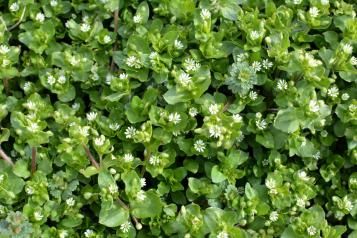
Chickweed is a fast-spreading annual broadleaf weed. It’s an aggressive spreader that forms clumps of trailing stems that can grow up to 35cm tall, with small, bright green oval leaves that grow in pairs. The leaves actually fold towards each other in the evening to protect tender new growth.
What is chickweed?
Chickweed is a fast-spreading annual broadleaf weed. It’s an aggressive spreader that forms clumps of trailing stems that can grow up to 35cm tall, with small, bright green oval leaves that grow in pairs. The leaves actually fold towards each other in the evening to protect tender new growth.
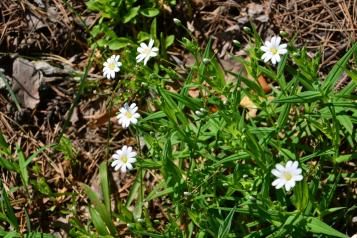
Chickweed has a surprisingly short lifecycle, flowering and setting seed several times a year. Keep an eye out for small, white, star-shaped flowers with five deeply divided petals. Flowers are most common in spring and autumn, but they last for just a day or so, before dying off and dropping large amounts of seed.
One thing to watch out for: don’t confuse chickweed with yellow pimpernel. They look pretty similar at first glance, but pimpernel has yellow flowers instead of white, and smooth stems rather than the tiny hairs you'll find on chickweed.
Why is chickweed a problem?
Chickweed spreads by self-seeding, and can quickly take over any bare areas on your lawn or in borders. It competes with plants and turf grass for nutrients and water, and can even harbour viruses that get spread to other plants by aphids.
But the biggest issue is just how many seeds it produces – a single plant can pump out up to 1300 seeds. Add in a germination process that takes as little as five to six weeks, and you’ve got a weed capable of squeezing out four or five generations a year.
Individual plants are easy enough to deal with, but the real challenge is keeping up with the volume of seed. Staying on top of chickweed means following an ongoing plan rather than taking a one-and-done approach.
Why is chickweed growing in your yard?
Chickweed thrives in poorly established or unhealthy lawns, especially those with bare patches or thinning areas it can take advantage of.
It's also a big fan of damp environments and moist soil, so keep an eye on shaded spots or areas with poor drainage. It tends to favour soil with high nitrogen levels and a neutral pH, and its presence can be a sign of underlying soil issues like compaction.
On top of that, chickweed is an aggressive spreader, capable of dropping thousands of seeds a year. These can blow in on the wind or hitch a ride with animals. Seeds can lie dormant in the soil for decades before germinating once conditions are right. Even disturbing the soil, whether through digging or just heavy foot traffic, can bring buried seeds back to the surface, exposing them to the light or moisture they need to sprout.
How to prevent chickweed
To prevent chickweed occurring in your garden in the first place, make sure you:
1. Remove chickweed plants before they set seed
Chickweed has a shallow root system, meaning it’s easy to pull by hand. If you spot any plants, dig them out before they have a chance to flower and set seed. Simply gather the stems at the base and pull by hand, or use a hoe to sever the plant beneath the soil surface if you’re dealing with a larger patch.
2. Aerate your soil
Chickweed can be a sign of compacted soil and poor drainage. Aerate your lawn annually to improve drainage and allow air, water and nutrients to reach your turf roots. To aerate your lawn, poke holes in the surface with a garden fork or hollow tine aerator. We recommend aerating your lawn annually in spring, when soil is moist and your lawn has plenty of growing time to bounce back.
3. Use a wetting agent
If you notice water pooling on the surface of your lawn, your soil may be struggling to absorb water, which can lead to the damp, moist conditions chickweed prefers. To improve water penetration, use a wetting agent like Scotts Lawn Builder + Wetting Agent. The product helps lawns absorb moisture, and also includes fertiliser to give your lawn an extra boost of nutrients.
4. Feed your lawn with a high-quality fertiliser
Feed your lawn in spring and autumn to encourage healthy turf that’ll keep out chickweed. We recommend a high-quality liquid feed like Scotts Lawn Builder™ 3in1 Weed, Feed & Green Up Liquid Lawn Fertiliser or a granular one like Scotts Lawn Builder™ All Lawn Types Lawn Food, 4KG | Love The Garden.
5. Minimise bare patches of lawn
Chickweed is an opportunistic weed that’ll quickly take over thin, patchy areas of lawn. Overseed your lawn and fill in any bare patches with a product like Scotts Lawn Builder™ Lawn Thickener Lawn Seed. Maintaining a thick, healthy lawn that can outcompete invading chickweed is key.
6. Raise your mower
Regular mowing encourages your turf to grow laterally, which is how you get a thick, healthy lawn that can outcompete weeds. Set the mower to a height suitable for your lawn type, following the one-third mowing rule.
7. Mulch garden beds
Add a thick layer of organic material (e.g. compost or bark) to your garden beds. Mulch blocks light from getting to chickweed seeds, preventing germination. The loose texture of the mulch also makes any young weed seedlings easy to pull up.
8. Water less often, but deeply
Water your lawn deeply about once a week, rather than lightly every day. Deep, infrequent watering encourages stronger and deeper grass roots that outcompete chickweed roots. It also allows the surface of your lawn to dry out. Chickweed likes moist environments, so dry soil can stop the weed from taking hold.
9. Control chickweed early and keep your lawn healthy
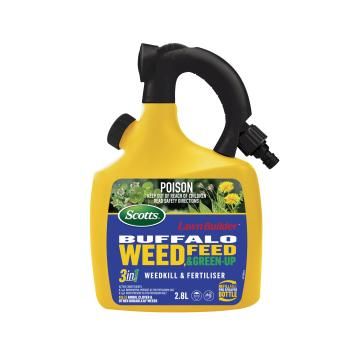
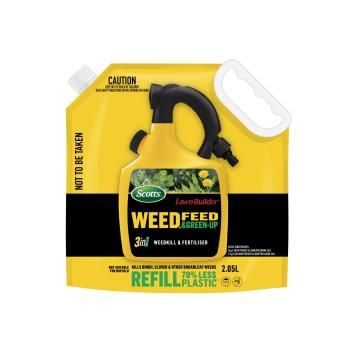
Treat chickweed while it is young and actively growing, before it flowers and produces seed. Scotts Lawn Builder™ Weed, Feed & Green Up Liquid Lawn Fertiliser controls chickweed and other listed broadleaf weeds while feeding, greening and thickening compatible lawns. Do not use this formula on buffalo lawns; choose Scotts Lawn Builder™ Buffalo Weed, Feed & Green Up Liquid Lawn Fertiliser instead and always follow the pack directions.
How to get rid of chickweed
Chickweed can usually be controlled without the need for chemicals, but weedkiller is a good option for large infestations.
1. Dig out small infestations
Chickweed has a shallow root system, so it’s easy to dig out. For small areas of chickweed, pull up individual plants by hand, using a hand-fork if necessary. For garden beds, hoe regularly to remove seedlings before they flower and set seed. Choose a dry day to hoe, so that the cut-off weeds will shrivel and die, rather than re-rooting.
If you’re digging plants out of your lawn, fill in the bare patches left behind with a top dressing like Scotts Lawn Builder Top Dress 25L, 25L | Love The Garden, then reseed with Scotts Lawn Builder™ Lawn Thickener Lawn Seed.
2. Use a weedkiller
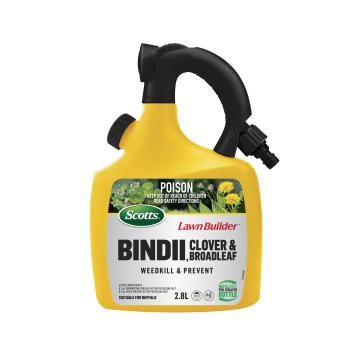
For larger infestations, use a selective broadleaf herbicide that lists chickweed on the label and is suitable for your lawn type. The best chickweed killer for lawns is Scotts Lawn Builder™ Bindii Weedkiller or Scotts Lawn Builder™ Buffalo Weed, Feed & Green Up Liquid Lawn Fertiliser. Both treatments are formulated to kill chickweed, along with any other broadleaf weed you have in your yard, without harming your lawn grass. Both products are suitable for all lawns, including buffalo. Take care to avoid weedkiller drifting onto other plants and always follow the manufacturer’s instructions.
FAQs
How do you identify chickweed?
Chickweed grows in clumps of trailing stems. Stems grow up to 35cm tall and have small bright green oval leaves that grow in pairs. The leaves fold together at night to protect new growth. The plant produces small white star-shaped flowers with five petals.
How to get rid of chickweed without killing grass
To kill chickweed without harming grass, use a selective contact weedkiller. These treatments are formulated to kill chickweed and other broadleaf weeds without harming lawn grass.
How do you get rid of chickweed?
The best defence against chickweed is a healthy lawn that naturally outcompetes invading weed. But if you’ve spotted chickweed in your yard, you can remove individual plants by hand quite easily - the weed has a very shallow root system. For larger infestations, use a selective broadleaf herbicide, formulated for your lawn type.