Blight

Tomato blight

How to deal with potato and tomato blight

Tomato Blight, also known as late blight, is a serious fungal disease caused by the wind-blown spores of the pathogen Phytophthora Infestans. Blight is particularly prevalent in warm, wet summers and this disease can completely destroy a crop. It also affects potatoes.

Author

Kate Turner

Horticulturalist

Identification and symptoms

Blight causes rapid discolouration of the leaves, turning them brown from the edges inwards. The leaves can dry and curl, and if the fungus is really prevalent you will see a white fungal growth on the underside or edges. The stems of the plants will have brown/black lesions on them and in advanced cases, the plant will completely collapse and die.

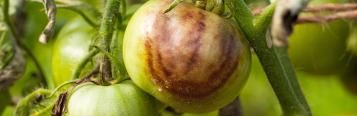
The fruits will have a watery green patch which eventually turns brown throughout the fruit, and the fruit rots making them inedible.
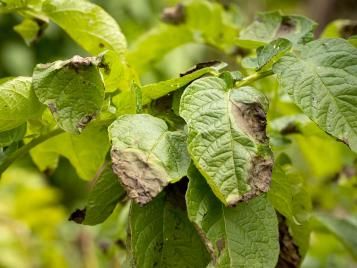
Potato blight on leaves

Control

Once you have blight there is very little you can do to stop it and there are no fungicides available to the home gardener to stop it. The more humid the summer, the more likely it is that the disease will spread.

As soon as you spot any symptoms, remove the leaves, and harvest any unaffected crops. You won’t be able to store the fruits as they will eventually develop the disease, so if you can eat or cook straightaway any red ones or make chutneys and preserves with unripened fruit.

Always get rid of the plants as soon as you can, but never home compost any material unless you have a working hot bin. Instead, burn or bury deeply the affected plants or add to your council collection garden waste bin as they have much higher temperatures with their composting process.

Any compost or soil used for growing these tomatoes mustn’t be used again for growing tomatoes or potatoes due to the spores living in the soil, but you can use it anywhere else in the garden.

Prevention

  • Always water tomatoes at the base and ideally in the morning.
  • Remove any bottom leaves that are touching the soil.
  • Airflow. This is essential. Make sure you don’t place tomatoes close to each other and make sure there is good air circulation.
  • Cordon or vine tomatoes generally are more resistant than bush varieties as they have more air flow.
  • Don’t over feed with a high nitrogen feed, use a higher potassium fertiliser such as Levington Tomorite Organic Concentrated Liquid Tomato Food.
  • Never plant tomatoes near potatoes or in soil or compost that was previously used for growing tomatoes.
  • Grow early cherry tomato types as they tend to ripen before blight takes hold.
  • Tomatoes grown in greenhouses or polytunnels tend to be less affected that outdoor grown ones so if you can, grow indoors but make sure humidity levels are kept low.
  • Experiment with blight resistant varieties such as ‘Lizzano’ ‘Fandango’ and ‘Lossato’. No tomato is 100% resistant, but these will fare better and tend to slow the disease down.

Find your local store

Looking for specialised gardening advice? Or just hunting for a specific product? Visit your local store and get help from dedicated staff.