What is fat hen?
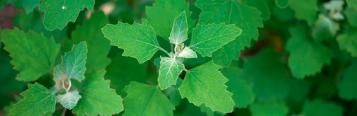
Fat hen (Chenopodium album) is an annual weed often seen on waste ground, in hedgerows and in gardens. In the past, it was grown as a food for pigs, sheep and chickens, hence the name ‘fat hen’. It is also known as white goosefoot. Although fat hen is generally considered a nuisance in gardens because it spreads so fast, it has some beneficial uses:
- The seeds provide food for farmland birds like greenfinches, linnets and yellowhammers.
- The leaves provide food for the larvae of several species of moth.
Fat hen spreads by self-seeding and quickly colonises bare ground.
How to identify fat hen?
Each fat hen plant produces an upright stem anywhere between 10cm and 1.5m tall, with toothed green leaves that become thinner and more angular as you go up the stem. Clusters of small greenish-white flowers appear in summer (from June to October), producing thousands of seeds that are spread by the wind.
Fat hen leaves are either oval or triangular and have a slightly wavy toothed edge. Look out for the colour of fat hen leaves – they are blue green on top and sometimes they may even have a little red flushing underneath.
A good way of identifying fat hen is by the way the leaves repel water, due to their tiny, microscopic wax-like crystals.

Fat hen damage
Fat hen spreads fast by self-seeding and competes with other plants for water and nutrients. It also often acts as a host for insect pests such as the mangold fly and the black bean aphid. Sometimes it may also become infected with viruses that impact the plants that are growing around it.
Fat hen control
Provided it is tackled early, fat hen can usually be controlled without the use of chemicals. To get rid of fat hen, try the following techniques:
- Hoe beds regularly to remove young fat hen seedlings.
- Pull out larger fat hen plants by hand before they set seed, using a hand fork if needed.
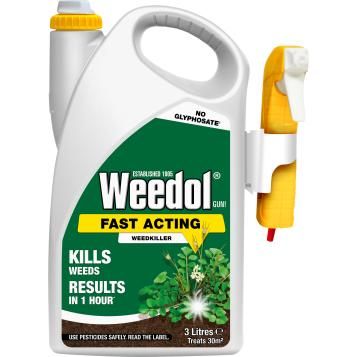
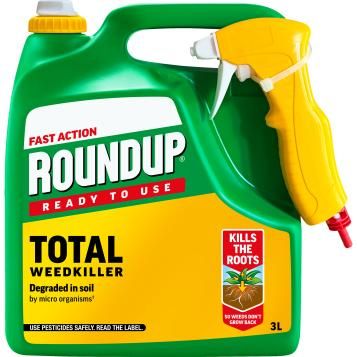
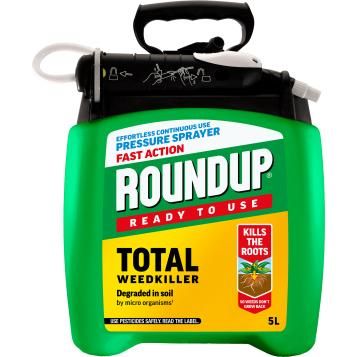
- If weedkiller is needed (for example, to clear very large areas of fat hen), use a contact weedkiller like Roundup Fast Action or Weedol Fast Acting Weedkiller. Take care to avoid weedkiller drifting onto other plants and always follow the manufacturer’s instructions.
How to prevent fat hen?
To protect your garden from fat hen, try one of these fat hen prevention methods:
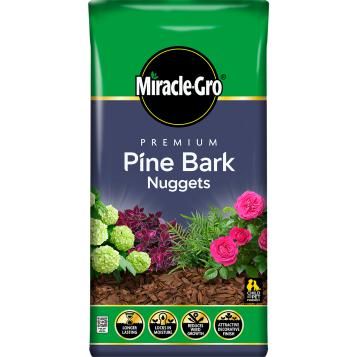
- Mulch new beds thickly with organic material, such as compost or bark, to block light from fat hen seeds, preventing germination. The loose texture of the mulch also makes any young fat hen weed seedlings easy to pull up.
- Remove fat hen plants before they set seed.