
Our guide to growing Rudbeckia
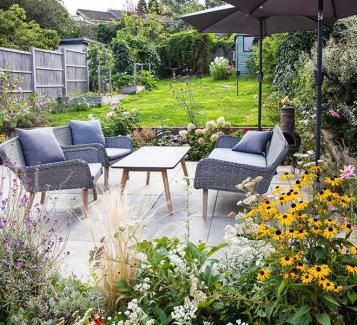
Rudbeckias have become one of our most popular garden plants in recent years, and it’s not surprising – bushy plants produce masses of colourful flowers with a long flowering period from July to October.
What is a Rudbeckia?
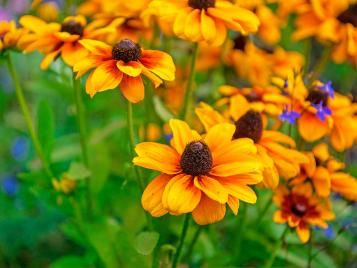
Rudbeckias are characterised by their colourful daisy-like flowers surrounding a prominent conical disk. They can be annuals, biennials or herbaceous perennials, the annuals grown as half-hardy annuals, sown indoors in warmth. The annual varieties may survive from year to year if left in the garden, but flowering may be reduced in subsequent years.
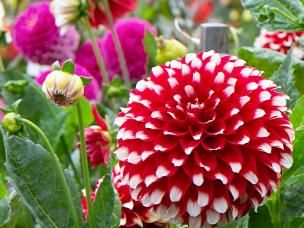
Although yellow is the prominent colour, in recent years numerous red and orange-flowered varieties have been produced.
How to grow rudbeckias
Cultivating rudbeckias
Rudbeckias grow perfectly in positions in either full sun or light shade. They need a fertile soil enriched with lots of organic matter, which holds plenty of moisture in spring and summer, doesn't dry out or become waterlogged.
Rudbeckia varieties
Annuals
- Rudbeckia hirta Cappuccino Bronze petals bleed into yellow at their tips.
- Rudbeckia hirta Cherry Brandy Cherry-red flowers.
- Rudbeckia hirta Prairie Sun Orange petals radiating back to lemon yellow with green central cone.
- Rudbeckia hirta Rustic Dwarfs Shorter variety with a mix of flowers from yellow to rich mahogany.
- Rudbeckia hirta Toto Dwarf, compact plants with golden-yellow blooms.
Perennials
- Rudbeckia fulgida var. sullivantii Goldsturm Deep yellow petals with an orange tint surrounding a purple-brown centre.
- Rudbeckia laciniata Goldquelle Bright lemon-yellow, double flowers.
- Rudbeckia laciniata Herbstsonne Golden, drooping petals surrounding a prominent pale green conical centre.
Sowing rudbeckias
Annuals
Sow rudbeckia seeds from February to April in pots or trays of moist seed sowing compost at a temperature of 20-25C (68-77F).
Transplant seedlings when large enough to handle into 7.5-10cm (3-4in) pots. Harden off by growing on in cooler conditions for 10-15 days before planting out after all risk of frost, 30cm (12in) apart.
Perennials
Sow rudbeckia seeds from February to July in trays or pots of good seed compost at a temperature of 65-70F (18-20C).
Transplant seedlings when large enough to handle into 7.5-10cm (3-4in) pots. Harden off early-sown plants by growing on in cooler conditions for 10-15 days before planting out after all risk of frost, 60-90cm (2-3ft) apart.
How to care for Rudbeckia
Annuals
Water rudbeckia plants whenever necessary to keep the soil or compost moist during spring, summer and early autumn, as this will prolong flowering. Always try to water the soil or compost, rather than over the foliage.
Apply a liquid plant food every couple of weeks in the growing season to encourage more, bigger and better flowers.
Deadhead faded flowers regularly to encourage more blooms to be produced.
Perennials
Apply a granular general plant food around the rudbeckia plant in spring.
Apply a layer of compost or mulch around the plants in spring to retain soil moisture and control weeds.
Water plants whenever necessary to keep the soil or compost moist during spring, summer and early autumn, as this will prolong flowering. Always try to water the soil or compost, rather than over the foliage.
Feeding with a liquid plant food every couple of weeks in the growing season will also encourage more, bigger and better flowers.
Plants are compact and bushy and rarely need staking.
Pruning rudbeckia
Wherever possible, deadhead plants by cutting back faded flowers to encourage further flushes of flowers. In autumn, cut down all growth to ground level after it has died back.
Divide overcrowded plants every 3 to 4 years as new growth begins in spring, lifting the plants and dividing them into smaller clumps.
| Flowering season(s) | Summer, Autumn |
|---|---|
| Foliage season(s) | Spring, Summer, Autumn |
| Sunlight | Full sun, Partial shade |
| Soil type | Chalky, Clay, Loamy |
| Soil pH | Neutral |
| Soil moisture | Moist but well-drained |
| Ultimate height | Up to 90cm (3ft) depending on variety |
| Ultimate spread | Up to 90cm (3ft) depending on variety |
| Time to ultimate height | 2-3 years |