What is sooty mould?
Sooty mould is a fungal disease caused by a number of different fungal species. Sooty mould disease doesn’t directly attack the plant it is growing on, but the presence of the black fungus on a plant’s leaves blocks out sunlight and can reduce the growth of the plant.
Sooty mould grows on honeydew excreted by sap-sucking insects such as aphids, whiteflies, mealybugs and some scale insects. Honeydew, which is very high in sugars, drops onto the leaves below where the insects are feeding, encouraging the growth of black sooty mould.
Some plant species themselves produce sugary substances (called plant exudates) on which sooty moulds feed and grow. This includes some species of Cistus.
Sooty mould tends to occur on plants growing in areas of the garden where air circulation is poor and humidity high.
How to identify sooty mould?
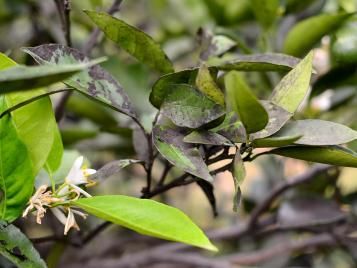
Sooty mould fungus causes superficial dark brown or black marks or patches on upper leaf surfaces. In severe cases, the sooty mould forms a thick covering which can crack during dry weather. Sooty mould on citrus leaves and camellias is quite common as well as on other glossy-leaved evergreens. Look out for colonies of sap-sucking insects like aphids clustered on the plant above the affected leaves, possibly accompanied by ants harvesting the honeydew.
Sooty mould symptoms and damage
As well as looking unsightly, a heavy covering of sooty mould on a plant’s leaves restricts the amount of sunlight reaching the plant, which slows down growth by reducing photosynthesis. The stems and fruits of the plant may also be covered with honeydew.
Sooty mould treatment and control
So, how to remove sooty mould from plants? There is no specific treatment for sooty mould on plants, but here are some suggestions to try:
- Wipe the leaves with a damp, soft cloth or sponge dipped in lukewarm water.
- Spray the leaves with water from a hosepipe to dislodge the sooty mould.
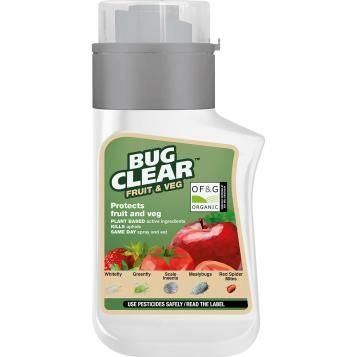
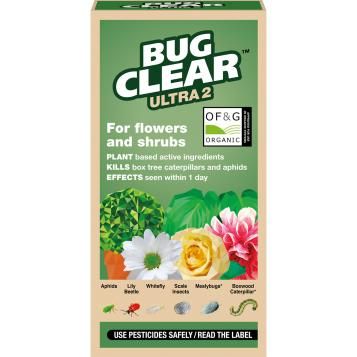
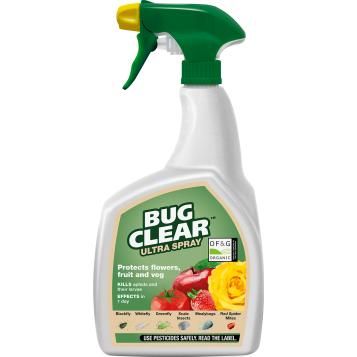
- Control the sap-sucking insects producing the honeydew using a contact insecticide or (if the culprits are mealybugs or scale insects) a systemic insecticide.
Before you treat insects on fruit and vegetables, always check that the insecticide is approved for use on edible crops. To protect bees and pollinating insects do not apply to plants when in flower. Do not use where bees are actively foraging. Do not apply when flowering weeds are present.
How to prevent sooty mould?
Thinning out susceptible plants and encouraging wildlife into your garden can protect your plants from sooty mould. Here are a few ideas to try:
- Improve air circulation around the plant by pruning out crowding branches.
- Encourage birds such as blue tits and great tits into the garden to control the populations of sap-sucking insects. Put out food for them and install nest boxes.
- Attract beneficial creatures which prey on sap-sucking insects. For example, plant fennel for hoverflies.
- Plant decoy plants like nasturtiums which attract aphids away from other plants and make them easy prey for ladybirds.