

Whitefly are small winged insects, which fly up in clouds of little white flies from affected plants when disturbed. Whitefly set up home and live out their lives on the underside of leaves. Three generations of whitefly live under the same leaf and feed by sucking up sap which weakens the plant.
How to identify whiteflies
Adult whiteflies are about 2mm long with white wings. Whitefly eggs hatch into flat, oval, scale-like nymphs. Before reaching adulthood they are called pupae and can have hairs or a white, waxy secretion on their upper surface.
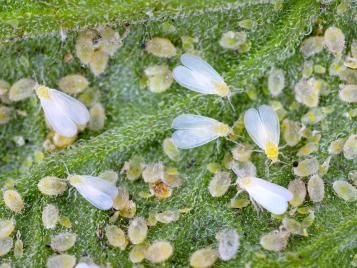
Whitefly infestation damage
Outdoors in the garden, whiteflies are fond of a wide range of plants, including azaleas, rhododendrons, honeysuckle and vegetables such as cabbages. Indoors, in the conservatory or in the greenhouse, they’re less picky and will feed on many houseplants, ornamentals and vegetables.
Whitefly damage on plants is usually scarcely visible, but brush past an infested plant or close the greenhouse door sharply and you’ll see a white cloud rise from the underside of the leaves.
Whitefly feed on sap and excrete a sugary substance called honeydew. When it drops on to the leaves it makes them sticky and a black sooty mould can develop. This looks unsightly and because it gradually deprives the leaves of light it might eventually kill the plant.
Whiteflies on plants can also spread plant viruses.
Whitefly control
How to get rid of whiteflies outdoors
- Fruit and vegetables: spray with a systemic insecticide. For best results as a whitefly control, spray thoroughly – to be effective the insecticide has to touch the pest.
- Ornamental plants such as azaleas, rhododendrons, honeysuckle or Viburnum tinus: Spray the underside of the leaves thoroughly with a systemic insecticide.
How to kill whiteflies indoors in the greenhouse or conservatory
- Yellow ‘sticky’ traps help control whitefly. The insects are attracted to the yellow colour of the traps and become caught in the non-drying glue.
- Use a whitefly biological control: this form of whitefly treatment introduces a tiny wasp into the greenhouse (Encarsia Formosa) that lays its eggs in the scale stage of the whitefly.
- Tomatoes, cucumbers, peppers and aubergines: spray underneath the leaves with a contact insecticide.
Before you use a whitefly spray on fruit and vegetables, always check that the insecticide is approved for use on edible crops. To protect bees and pollinating insects do not apply to plants when in flower. Do not use where bees are actively foraging. Do not apply when flowering weeds are present.
How to prevent whiteflies
The stronger the plant, the less likely it is to be infested with a pest like whitefly so it is a good idea to feed your plants in the spring with a general fertiliser.
If you grow cabbages or sprouts, plant strong smelling alliums like onions, garlic or chives nearby to confuse cabbage whitefly.


