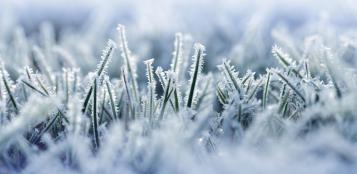

Close-up view of frosted grass blades

How to prepare your lawn for winter

Some minor maintenance will help your garden cope with winter

Our lawns give us weeks of pleasure in summer, so in autumn it’s time for us to return the favour! Invest some time in getting your lawn ready for winter and you’ll be rewarded by healthy green grass in spring.

Clear away fallen leaves

Start preparing your lawn for winter by tidying up! Let your grass make the most of low winter light levels and short days by raking it regularly in autumn to clear fallen leaves and other debris. Move toys and summer garden furniture off the lawn and store them somewhere dry ready for next spring.

Gardener raking fallen leaves off a lawn in autumn.

Mow your lawn before winter

As the grass starts to grow more slowly, cut your lawn less often and on a high mower setting. Traditionally, the last date for mowing is usually October or early November, but don’t put your mower away completely! In cold winters the grass will stop growing altogether and you won’t need to mow, but in mild weather you may need to give it an occasional trim just to keep it tidy.

Look after your lawn in winter with these three key winter lawn care tips:

  • Never mow frosty or frozen lawns, as this will damage the grass blades.
  • Don’t mow wet grass – it tends to clump together, giving an uneven cut and potentially damaging your lawnmower.
  • Avoid walking on wet lawns, as this will compact the soil. Stay off frosty lawns too, as walking on the frozen grass will damage it.

Scarify to remove thatch

The next step in pre-winter lawn care is to scarify the lawn. This gets rid of thatch, which is a layer of dead grass and other plant debris that builds up around grass roots over time. Removing thatch improves air circulation, reducing the risk of fungal diseases, and also makes it easier for water to reach the roots of the grass.

You can scarify small lawns by hand using a spring tine rake, raking firmly over the grass. However, this can be quite hard work, so for large areas you may find it easier to use a mechanical scarifier.

Aerate the soil

Our lawns get a lot of foot traffic over summer, and this results in compacted soil. Aerating the lawn in autumn is an important part of winter lawn preparation, breaking up the compacted soil, improving drainage and getting oxygen back into the soil so that roots can grow strong.

The simplest way to aerate your lawn is with a garden fork. Press the tines of the fork as far into the soil as possible – at least 3-4in deep. Lean gently on the handle of the fork so that the soil around the tines lifts very slightly, then remove the fork. Move a short distance away and repeat. For heavy clay soils, use a hollow tine aerator rather than a garden fork. This removes small plugs of soil from the lawn, leaving holes which can then be filled with top dressing.

If your garden is too large to do all in one go, you can simply aerate a section each year, or use a mechanical aerator.
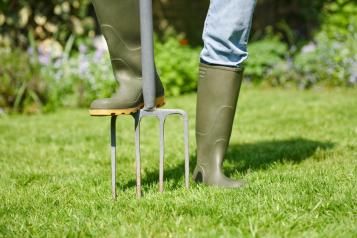

Gardener pushing garden fork into lawn with their boot to aerate the soil

Top dress the lawn

Lawn top dressing is a mixture of organic materials, sand and fertiliser, ideal for improving soil structure and boosting lawn health. Top dressing also helps fill in any small dips in a lawn. After aerating your lawn, spread top dressing over the area and work it into the holes with a soft brush or a rubber rake.

Overseed and fix bare patches

If a summer of hard wear has left your lawn looking sparse, overseed it in autumn so the grass has time to germinate and develop roots before winter. You can either sow the grass seed before top dressing, or mix it into the top dressing and apply them together.

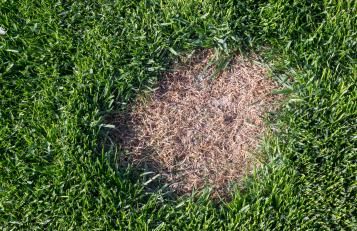
Fix any bare patches by raking the soil surface lightly to break it up and then scattering lawn seed. Pets can wreak havoc on lawns, so if the family dog is the cause of your lawn’s bare patches, use Miracle-Gro Patch Magic Dog Spot Repair, which contains gypsum to rebalance soil nutrient levels and repair the damage done by urine burns.

Bare patch of soil in lawn

Apply an autumn lawn feed

Give tired lawns a boost before winter with an autumn lawn feed. Autumn lawn fertilisers are high in phosphates and potassium to prepare the grass for winter temperatures and promote strong root growth. To make sure you cover all areas of your lawn evenly, use a lawn spreader and spread the fertiliser in two passes at right angles to each other – for example, going first sideways across the garden and then up and down the length of the garden. If there’s no rain due, water the lawn well afterwards to avoid burning the grass. Always follow the instructions on the back of pack from the manufacture.

FAQs

When should the last cut of grass be before winter?

Depending on the weather, the last mowing date of the year will usually be in October or November. Mow on a dry day, using your mower’s highest setting. You may need to give your lawn an occasional light trim during mild winters, but don’t mow frozen or waterlogged lawns, as this will damage them.

Should I feed my lawn in winter?

Autumn is the best time to give your lawn a pre-winter feed. An autumn lawn feed high in phosphates and potassium will provide the nutrients your lawn needs in winter, hardening the grass so that it can cope with cold weather as well as promoting strong root growth.

How can I prepare my grass for winter?

Follow these 6 steps to prepare your lawn for winter:

  1. Rake fallen leaves off the lawn
  2. Mow the lawn on a high mower setting
  3. Scarify to remove moss and thatch
  4. Aerate the soil to break up compaction
  5. Overseed and repair any bare patches
  6. Apply an autumn lawn feed.

Find your local store

Looking for specialised gardening advice? Or just hunting for a specific product? Visit your local store and get help from dedicated staff.