
Our guide to growing jasmine
Jasmines are very popular deciduous, semi-evergreen or evergreen climbing plants. Most are summer flowering, producing white, cream or pink, scented flowers. Jasminum nudiflorum (winter jasmine) is a wall shrub that, as its name suggests, produces its delightful yellow flowers in winter.
Several summer-flowering species are commonly grown - and some are hardier than others. Jasminum officinale (common summer jasmine), J. beesianum, J. humile and J. x stephanense are generally frost hardy and can be grown outside against a warm, sunny wall. In cold regains, it is better to grow them in a a conservatory or greenhouse.
Jasminum mesnyi and J. polyanthum are not hardy and are best grown as houseplants, preferably in a conservatory or greenhouse.
How to grow Jasmine
Cultivation
Indoors, jasmines prefer a brightly lit position, preferably a south-facing or west-facing aspect, but with some protection from strong, burning sunlight in summer. They can be moved outside to a warm, sunny patio in summer - but make sure you bring them back indoors before the weather turns cold and frosty in autumn. They need a minimum temperature of 13-15°C (55-60°F).
Outdoors, summer-flowering jasmines need to be grown in a warm, sunny, sheltered position - preferably a south- or south-west facing aspect. Jasminum nudiflorum tolerates more shade and can also be grown in a a south-east or north-west facing aspect.
Where to plant jasmine
Summer jasmines thrive in warm locations that get plenty of sunshine and that are sheltered from harsh conditions. You can grow them either in the ground or in containers, but it’s important that the soil drains well. Winter jasmines, on the other hand, are much hardier and can be grown in places that only get sunshine some of the day.
Support for the plant is also an important factor, particularly for summer jasmine, which will need something solid to grow against, such as a wall, trellis or fence.
Indoors
Jasmines are perfect for growing in good-sized pots and other large containers of multi-purpose compost or John Innes compost.
Outside
Dig over the soil thoroughly and add lots of bulky organic matter, such as planting compost, to break up heavy soils and help ensure good drainage.
When growing jasmine in pots, it is ideal to use a good-sized pot and other large containers filled with multi-purpose compost or John Innes compost.
Suggested planting locations and garden types
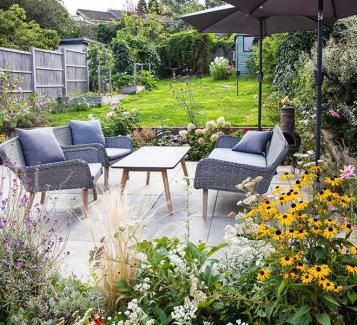
Flower borders and beds, walls and fences, patios, containers, city and courtyard gardens, houseplant, indoor plant, summer patio plant.
How to care for Jasmine
Indoors
Water plants moderately when plants are in growth (April to September), but more sparingly when dormant (autumn and winter).
Feed with a high potash liquid feed (such as a tomato feed) every few weeks during the growing season from late spring to early autumn.
Outside
Water freely during dry weather. Plants growing in containers will need regular watering from spring to the beginning of autumn.
Feed once a year with a controlled-release feed applied in spring, or liquid feed every fortnight from March to September.
When does jasmine flower?
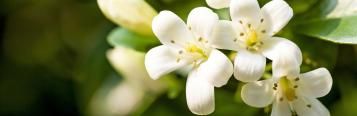
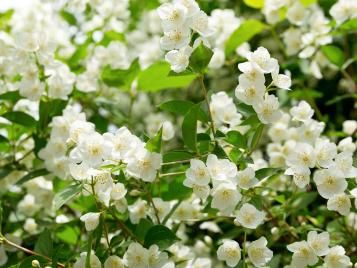
This depends on the type of jasmine you’ve planted. Common jasmine (Jasminum officinale) will normally flower in the summer, whereas winter jasmine (Jasminum nudiflorum) will, as the name suggest, bloom either in the winter or the early spring. They’re relatively easy to tell apart: common jasmine flowers are white and fragrant, while winter jasmine flowers are yellow and don’t give off any scent.
How to train jasmine
Any young jasmine will need some training in the early stages to encourage strong and even growth. If training against a trellis, then the jasmine should be woven and wrapped around the trellis bars, and tied to the trellis loosely, so that it’s held in position but can still grow. The same principles can be applied to grow jasmine on a wire fence.
When to prune jasmine
Both types of jasmines should be pruned immediately after flowering, giving new growth time to mature properly, which enables stronger growth the following year. For summer jasmines, this is in late summer or early autumn, and for winter jasmine, in the spring.
Cut back the stems that have flowered to a strong side-shoot lower down on the plant. At the same time, thin out overcrowded, crossing and unwanted stems.
| Flowering season(s) | Summer, Winter |
|---|---|
| Foliage season(s) | Spring, Summer, Autumn, Winter |
| Sunlight | Partial shade, Full sun |
| Soil type | Chalky, Clay, Loamy, Sandy |
| Soil pH | Neutral |
| Soil moisture | Moist but well-drained |
| Ultimate height | Up to 6m (20ft) |
| Ultimate spread | Up to 90cm (3ft) |
| Time to ultimate height | 5-10 years |