A guide to annual weeds
Weeds, pests & diseases

A guide to annual weeds

Your garden is the centrepiece of your Great British summer, so the last thing you want is for annual weeds to come up and spoil your green landscape.

It’s easy to think that these weeds will simply die off in the autumn and can be forgotten about. But the reality is somewhat different: the longer they’re alive, the longer they have to spread their seeds and ensure that more of them come back next year and beyond.

This makes annual weed removal an essential task for your lawn and garden. This guide highlights some of the key annual weeds in the UK to look out for, and sets out your options on how to remove them and when. 

What are annual weeds?

The annual weeds definition applies to weeds that have a lifespan of one growing season (which in the case of the UK, is generally from the spring to the autumn). They don’t have the resilience to survive a British winter, and so they spread their seeds over the course of the season, so that new ones can grow the following year.

The variety of annual weeds in the UK is considerable, and knowing what to look for can help you address any issues before they spiral out of control. Here are six examples of annual weeds: 

Fat hen (Chenopodium album)

The fat hen weed is the fastest-growing of all of the annual weeds, and comes in many different varieties. Just one Chenopodium Album plant can produce as many as 20,000 seeds in its lifetime, making it imperative to remove at the earliest opportunity.

Young fat hen weeds have bright green leaves which tend to darken with age, and will grow between 60 and 120cm tall with a vertical stem. The colour and shape of the leaves is the main identifying trait: the lower leaves are usually shaped like a rhomboid, whereas the upper leaves would usually appear as a branched stem. 

Chickweed (Stellaria media)

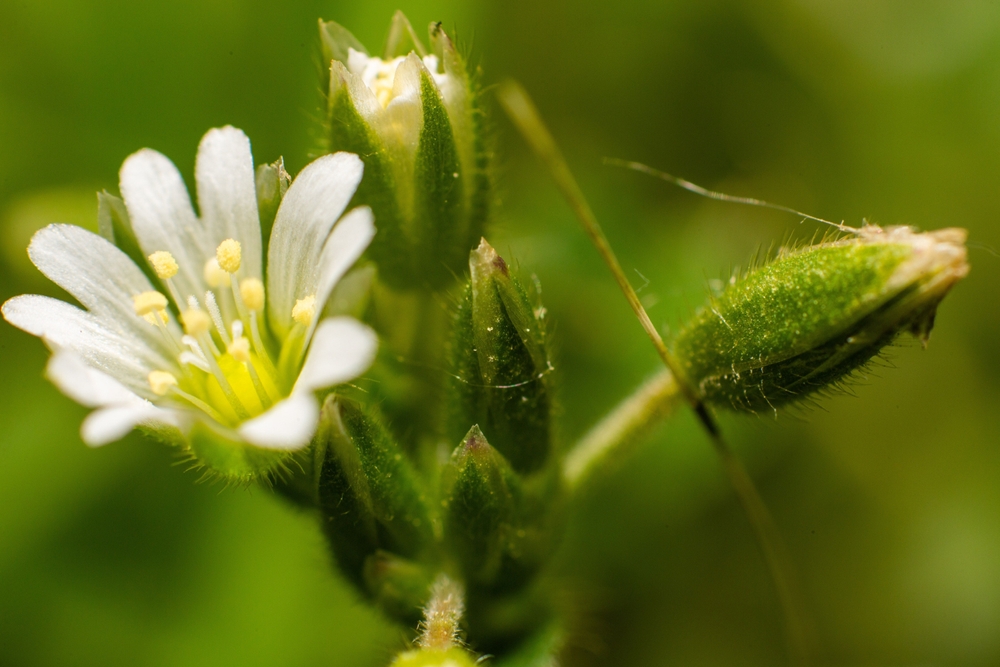
Chickweed is one of the most common annual weeds in the UK. It varies greatly in size and weight and can be found in a wide range of locations. As it attracts greenflies and spider mites, it’s important to remove this weed as soon as you can.

Chickweed is most easily identified by its small white star-shaped flowers and tiny white line of weaved hair that grows along the stem. You can expect the Stellaria media to vary in size between 5cm and 50cm with oval-shaped leaves that have pointed tips. The texture of the leaves can vary from smooth to slightly hairy. 

Groundsel (Senecio vulgaris)

Groundsel is easily blown in by the wind, and produces large volumes of seeds, and so often crops up in unexpected areas. It’s also capable of producing several generations of weed within a single growing season.

A groundsel weed is capable of growing up to 60cm tall, and its evenly-spaced leaves with toothed edges are either smooth, or covered in cotton-like hairs. The stems branch out into little clusters which have small yellow flower heads.  

Hairy bittercress (Cardamine hirsuta)

Hairy bittercress is slightly different from its biennial or perennial relative, wavy bittercress. It may only grow to a few centimetres in height, but after flowering, its seed pods explode and can disperse seeds as far as a few metres away. Commonly found on pathways and in areas of bare soil, it thrives in damp conditions and has been known to be imported into gardens in the soil found in garden centre potted plants.

Annual meadow grass (Poa annua)

One of the most common coarse grasses found growing in lawns, flower beds, paths etc. This grass weed is capable of flowering even when the lawn is mown short, as the seeds can come out below the reach of a mower blade, and the small seed heads can quite easily be seen creating a speckled effect. Annual meadow grass struggles in acidic soils, so avoid liming your lawn if this grass weed emerges. 

Yellow oxalis/creeping woodsorrel (Oxalis corniculata)

This low-growing annual weed blooms with bright yellow flowers, but the clover-like appearance of the leaves can sometimes lead to mistaken identity. With the stems being able to root wherever they touch, it doesn’t take this ground invader long to cover a fair-sized area, along with the addition of producing a vast quantity of seed which is thrown out of their seed pods to ensure an even wider spread.  

How can annual weeds be controlled and removed

The good news is that annual weeds, given their relatively short lifespan, don’t have the time to develop deep or complex root systems, which makes them easier to control and remove. Depending on the extent of the annual weeds, and the maturity of them, there are several tactics you can try to get rid of them.

Manual removal

In many cases, a spot of manual gardening will be enough to do the job, especially for individual weeds in isolated areas. You can either pull the weeds up by hand, making sure that you bring the root network with the plant, or hoe the tops off so that the weed can’t muster the energy to regrow.

Contact weedkillers

If weeds are more mature and established, then you may want to consider using a contact weedkiller, which is sprayed directly onto the leaves of the weed, and works its way across the plant to kill it off. Products like Weedol Gun! Fast Acting Weedkiller get to work within a matter of hours, and can kill off unwanted weeds within a few days. However, it’s important to note that contact weedkillers are non-selective, so take care not to spray them on any other plants, as it may kill them off as well.

Lawn weedkillers for annual grass weeds

If you have annual grass weeds affecting your lawn, then a selective lawn weedkiller is your best option, such as Weedol LN Lawn Weed Control. This will not only kill off the weeds and prevent them from regrowing, but will do so without affecting the health of the grass around it. 

FAQs

What’s the difference between annual vs perennial weeds?

Annual weeds have a lifespan of one growing season, during which they will spread their seeds so that others can grow in future years, before they die off as the winter frosts set in. Perennial weeds, on the other hand, can store energy in their root systems to survive harsh winters, and can therefore live for several years. To see a wider range of annual biennial and perennial weed examples, explore this article on identifying different types of weed.

If I spot annual weeds, when should I try and remove them?

As soon as possible! Younger annual weeds are easier to remove, because they haven’t had the chance to grow and establish themselves, and their root networks haven’t expanded and embedded themselves more deeply in the soil. Removing annual weeds at the earliest opportunity, including the flowers and the seed heads, minimises the impact on surrounding plant life, and reduces the chances of weeds coming back and regrowing in the same area. 

Find your local store

Looking for specialised gardening advice? Or just hunting for a specific product? Visit your local store and get help from dedicated staff.