
Weeding by hand
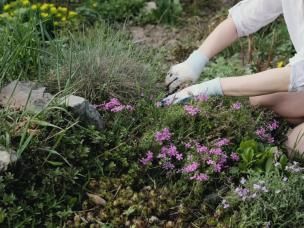
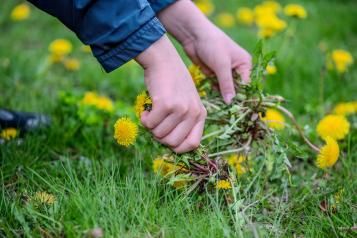
Weeds are an inevitable fact of gardening life, but that doesn’t mean they can’t be beaten! These days, gardeners often prefer to get rid of weeds naturally when possible, and hand weeding is one of the simplest methods to do this.
Hand weeding has several advantages. For a start, you don’t need much in the way of tools to do a bit of hand weeding, just a pair of gardening gloves and a hand fork. It’s good exercise and can even be enjoyable on a sunny day! Plus, there’s the satisfaction of seeing the results of your hard work as you admire your weed-free borders afterwards.
However, it has to be noted that there are downsides to hand weeding. It can be hard on your back and knees. Permanently killing perennial weeds naturally is a challenge, as some deep-rooted perennial weeds are almost impossible to get out by hand. Also, the action of hand weeding disturbs the soil, bringing a new batch of buried weed seed to the surface where it can germinate. This produces a new flush of weeds in a couple of weeks’ time, which can be very dispiriting!
The key to successful hand weeding is to know which weeds you can get rid of naturally by hand, and when it’s time to reach for the weedkiller.
Annual and perennial weeds
When deciding how best to get rid of weeds in your garden, it’s useful to know whether you are dealing with annual or perennial weeds.
Annual weeds
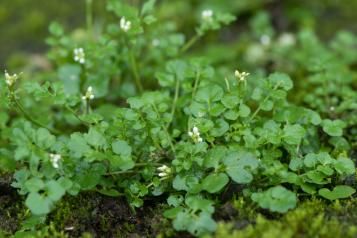
Annual weeds will germinate from seed, grow, flower, set seed and then die all in one year. Some fast-growing annual weeds, also called ephemeral weeds, can complete several life cycles within the same year. Annual weeds tend to have shallow root systems and spread by seeding, so it’s important to get rid of them before they get a chance to set seed.
Common annual weeds in the UK include chickweed, hairy bittercress, speedwell and cleavers.
Perennial weeds
Perennial weeds tend to have extensive or deep roots and can live for many years, usually dying back in winter and reappearing in spring. They can spread both through seeds and via their roots.
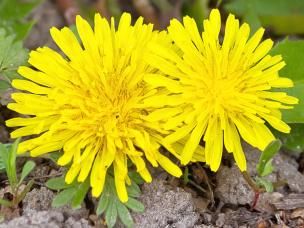
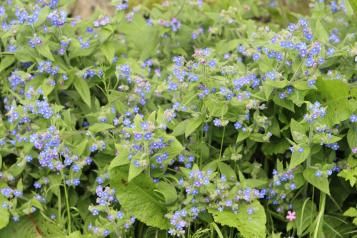
Common perennial weeds in the UK include dandelions, nettles, bindweed, docks, alkanet, brambles and creeping thistle.
Annual weeds are relatively easy to tackle by hand, as they won’t grow back if the stem is cut off from the roots. Perennial weeds are more of a challenge, as they can grow back from their roots even if the top growth is cut off or killed. Getting rid of perennial weeds means getting the whole root out, and this can require heavy digging.
Using hand tools to get rid of weeds
There’s a wide range of tools available for hand weeding. Here are some of the most useful tools:
Hand forks
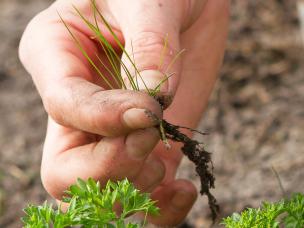
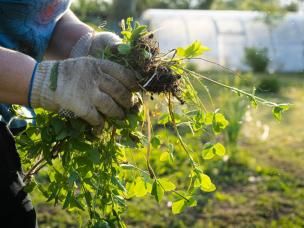
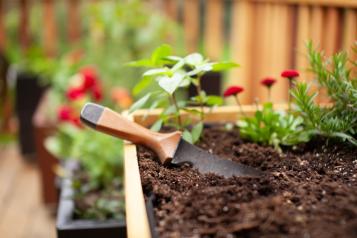
Hand forks are ideal for hand weeding if you only need to clear a small area of weeds. Simply insert the prongs of the fork underneath a weed to loosen it and lever it up, then use your other hand to pull the weed out of the soil.
Gardening knife
The Japanese gardening knife, also known as the hori hori, is fast becoming many gardeners’ favourite tool. Its long narrow blade is ideal for digging around long roots to loosen them and it can also be used to cut through stubborn roots.
Dandelion weeder
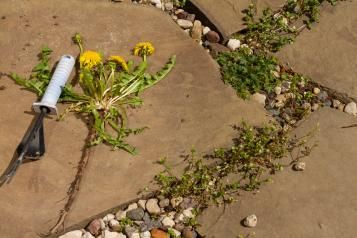
Designed specifically for tackling dandelions’ tap roots, dandelion weeders have a long stem with a pointed end. This can be inserted deep into the ground and used to loosen the soil around the root. The pointed end is useful for cutting off the root deep underground where it is less likely to grow back.
Dutch hoe
Hoeing weeds with a Dutch hoe takes much of the backache out of the job, as the hoe can be used while standing up. There’s no difficulty in learning how to hoe, just slide the blade of the hoe over the soil so that its front edge runs just below the surface. This severs the stems and leaves of the weeds from their roots and will kill any annual weeds, although it is only a temporary solution for perennial weeds like dandelions. Using a hoe for weeds works best on soil that is light and loose.
Garden fork and spade
To tackle perennial weeds like docks, alkanet and brambles by hand, you’ll need a garden spade. The key is to dig up as much of the root as possible. This is easier to do when the plants are young, so keep an eye on your beds and dig up any young perennial weed seedlings as soon as possible. When digging up established perennial weeds, it’s not always possible to get the whole root out, but if you keep on doing it every time the plants appear, eventually you’ll weaken the plant to the point where it stops coming back.
Using weed membrane to control weeds
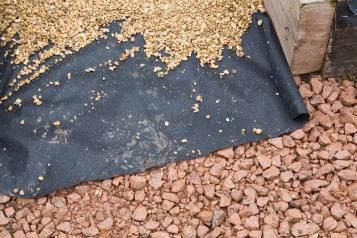
Weed membrane laid on bare soil stops sunlight reaching any weeds growing up through the soil. This prevents the leaves from photosynthesising and making food, so the weeds gradually weaken and die. Using weed membrane, annual weeds can be killed off in a few months, while perennial weeds will need to be covered for at least a couple of growing seasons to die. Weed membrane is often covered with bark chips to make it less visible.
Biodegradable weed membrane
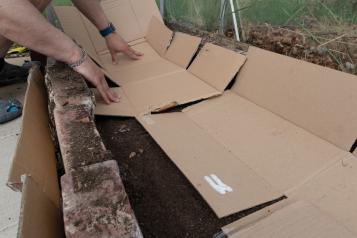
You can now buy biodegradable weed membrane made from a range of materials, including corn starch, jute and even thick paper and cardboard. As well as suppressing weeds by blocking out light, these materials will gradually break down in the soil. Biodegradable weed membranes tend break down faster if covered with soil or bark chip, so if you need longer-term weed suppression it may be best to leave the membrane uncovered on the soil and weight it down with bricks or rocks to stop it blowing away.
Many gardeners, especially those adopting a no-dig approach to gardening, simply use old cardboard boxes as a form of biodegradable weed membrane, with a thick layer of organic mulch over the top. This has the advantage of using up all those online delivery boxes! Make sure you remove all plastic tape from the boxes before using them as a weed membrane, as this can break down into microplastics in the soil.
Controlling weeds with mulch
As well as being great for soil structure, fertility and moisture control, mulching can help in the battle to control weeds. Spreading a thick layer of organic mulch on your beds in autumn suppresses any existing weeds by blocking out light and delays germination of weeds in spring. Annual mulching also makes it simpler to get out deep-rooted weeds, as the soil becomes looser and easier to work thanks to all the organic material incorporated into it.
When to use weedkillers
Sometimes the job is too big for hand weeding. If you’re tackling a big spread of well-established perennial weeds like brambles, nettles and docks, it can be simpler and more effective to use weed killer to clear the area. You can then keep on top of the weeds with regular hand weeding and mulching.
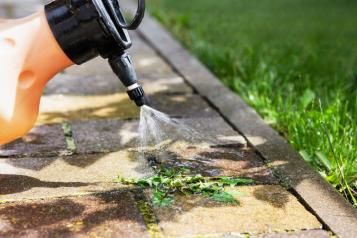
Weedkillers are divided into two main categories:
Systemic weedkillers
Systemic weedkillers are absorbed through the leaves of the plant and travel to the roots, killing the whole plant. Glyphosate-based weedkillers are systemic.
Contact weedkillers
These will kill any foliage (plant or weed) that they come in contact with, but they will not kill the roots of the plant, so perennial weeds sprayed with contact weedkiller will grow back. Glyphosate-free weedkillers are contact weedkillers.
Weeding doesn’t have to be a chore! With the right tools and products, you can spend less time weeding and more time enjoying your garden this summer.