
How weedkillers work: your questions answered
Weeds are the bane of many a gardener’s life — especially when they keep reappearing. Traditional methods of weed removal, such as taking them out by hand, can be time-consuming and physically challenging. And if you aren’t able to kill the weeds off entirely, it might only be a temporary fix.
For that reason, weedkiller is often a necessary choice for removing the weeds from your paths, patios, flower beds, borders and lawns. But there are several types of weedkiller to choose from, some more suitable than others for different types of weed, different environments, and speed of action.
How long does weedkiller last? What is herbicide used for? Will weedkiller kill trees? You’ll get answers to all these questions and more in this guide.
What is weedkiller and how does it work?
Weedkillers are chemical-based liquids that are specifically engineered to target different types of weed in the best way possible. They will kill off weeds either by:
- preventing them from photosynthesising, meaning that they can’t produce the energy they need to stay alive
- disrupting the way their cells divide and grow
- simulating plant hormone to destabilise their natural wellbeing
- ensuring that they can’t absorb nutrients from the soil
There is a wide range of weedkillers available, so whatever the weeding job that you are trying to tackle, there is a weedkiller that is matched to that job and will do exactly what you need.
When and where should weedkillers be used?
Weeds can generally be controlled at any time of the year, but the best time to use weedkillers is when they are growing the most (usually in the spring and summer) because they absorb weedkillers more quickly.
This is particularly the case with systemic and selective weedkillers, which rely on activity within the plant for their effectiveness. Applying liquid weedkillers in calm weather conditions minimises the drift of the solution onto plants that you want to keep. Applying to the leaves results in weedkiller moving up to the growing points and down to the root tips.
The location of the weed is also important. For example, if a weed is growing in the middle of the lawn then you should use a selective weedkiller, but if it is growing between patios or paving then a residual weedkiller would be more appropriate.
In situations when you are looking to clear a patch of land and plant up quickly, it is possible to use a glyphosate-based weedkiller, which would allow you place new plants after seven days without causing the new plants any harm.
Should I still consider weeding by hand?
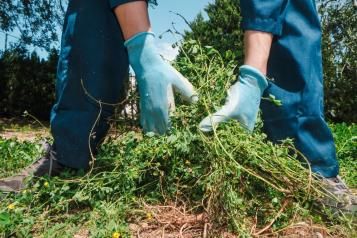
Absolutely. If weeds are localised and aren’t too deep-rooted, then it can still be worth removing them manually. This can be through steadily pulling the weeds out with their roots; digging and forking them out; hoeing to disrupt the soil so that that weeds can be eased out; or applying mulch to the soil surface to suppress weed growth.
Post-emergence herbicides
As the name would suggest, these herbicides are used to kill weeds that have already germinated. These weedkillers are most effective when the weed plants are in their early stages and before they’ve begun to produce seed(s).
Roundup® Tough Ready to Use Weedkiller can help you tackle emerging weeds in the spring, before they have time to overrun your garden as the weather gets warmer in the summer.
Pre-emergence herbicides
Pre-emergence herbicides are for the grassy and broadleaf weeds that lurk out of sight, storing energy in their roots in the autumn and lie dormant in the winter, before springing into life (no pun intended) in the spring.
Selective lawn weedkillers
This is the most common type of weedkiller, and only kills certain species by stimulating growth in the weed that it can’t sustain. Notably, they generally don’t target grass, which makes them ideal for large lawn areas (although you should still check for specific grass types just in case).
Try Weedol® LN Lawn Weed Control on leafy weeds during the spring and summer, ideally on moist soil and when the weeds are still small and actively growing.
Non-selective weedkillers
Also known as ‘broad spectrum’ herbicides, these weedkillers will more or less kill all the plant life that they come into contact with — whether they’re plants you want to get rid of or not. Unless you can apply them very carefully, non-selective weedkillers are best suited to tackle weeds surrounded by man-made objects and materials.
Apply Weedol® Rapid Weed Control to remove weeds that are growing on hardscapes, such as pavements, driveways, and through other nooks and crannies.
Contact weedkillers
These weedkillers - typically non-selective - work by coming into direct contact with the leaves of a plant. In some cases, leaves will start to die off in as little as ten minutes — and because they don’t affect the suit, new plants can be sown in the same place as soon as 24 hours later.
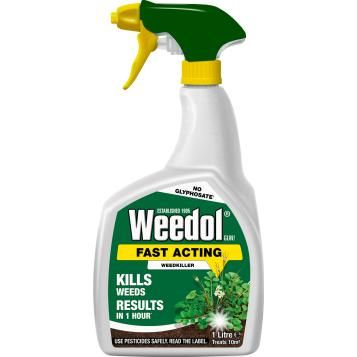
Put Weedol® Gun!™ Fast Acting Weedkiller on annual weeds, and on any areas where vegetation isn’t wanted. Use on a calm, warm, dry day between spring and autumn. If it doesn’t work the first time, keep applying it regularly until the weed is finally killed off.
Systemic weedkillers
Systemic weedkillers take the ‘slow burn’ approach by gradually killing the weed from the inside out, either by being sprayed onto the leaves, while taking care to avoid spraying on flowers. It can take a week or more to see the effects of the weedkiller, and up to a month to get the results you’re looking for.
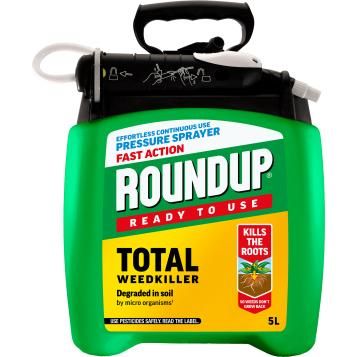
Roundup® Fast Action Ready to Use Weedkiller is perfect if you’re playing the long game — but as these types of weedkiller can wash off within the first six hours after application, wait for a dry day.
Residual weedkillers
Residual weedkillers combine proactivity with longevity. They create a weedkilling barrier in the ground that prevents weeds from germinating, and that barrier stays in place for several months so that weed growth is kept under long-term control. While they take up to a month to take effect on existing weeds, one application can last for an entire season.
Apply Weedol® Tough Weed Control on areas where you don’t intend to plant anything that season, but still want the weeds gone. Don’t dig or disturb the soil in any way after the weedkiller has been applied for the rest of that season.
How should I use weedkillers?
The chemicals within weedkillers can be dangerous if they’re mistreated and come into direct contact with humans. It’s essential that you read the instructions on your chosen weedkiller product before you start, and follow them carefully.
Wearing protective clothing, such as goggles, gloves and a face mask, is strongly recommended, and you shouldn’t walk across treated areas until dry, to avoid the transfer of products onto desired plants.
There are three main ways of applying weedkiller, which vary depending on the type of product that you buy:
With a hand sprayer, or a Pull & Spray pack
Some weedkillers can be used with a manually operated hand sprayer, or come in a ‘Pull & Spray’ pack with a nozzle attached to the bottle. You may need to adjust the spray setting on the nozzle to ensure that coverage is focused on the right areas (especially if using non-selective weedkiller). Ideally, the nozzle should be pointed no more than 1ft from the weed, so that the risk of drift is minimised.
With a pressure sprayer
These are best suited for treating large areas, and work in a similar way to a hand sprayer, although adjusting the nozzle is even more important here.
With a watering can
If applying with a watering can, a fine rose or a weedkiller sprinkle bar will give you effective control over where you apply the weedkiller. There may be some residual weedkiller left in the watering can after use, so you may want to use a separate watering can for weedkilling, that way your other plants aren’t affected when you water them as normal.
FAQs
How long does weedkiller last?
That depends mainly on the type of weedkiller you use. For example, a residual weedkiller is designed to provide protection for several months, but will take longer to have any initial effect. At the other end of the scale, fast-acting weedkillers will work within 24 hours or less, but may need reapplying every 1-2 weeks.
Will weedkiller kill trees?
Non-selective weedkillers can cause serious damage to trees, and even kill them if enough weedkiller comes into direct contact with them. Some selective weedkillers can also have the same effect if not applied with care. If you’re concerned about tree damage, try to avoid any overspray or drift by applying weedkiller on calm, warm, dry days. Alternatively, avoid using weedkillers in areas immediately surrounding trees, and remove any weeds by hand instead.
Does glyphosate kill grass?
Yes. Glyphosate is a substance found in most non-selective herbicides, and if it comes into contact with grass, it can cause discoloration, poor growth, or even death if exposed to large concentrations of weedkiller. To avoid these issues, use a selective weedkiller in areas around your lawn, keep weedkiller concentrations low, and apply with care.