
Read our guide to patching up your lawn
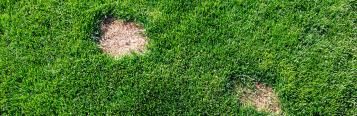
There’s nothing so disheartening as discovering patchy grass and bare spots in your lawn when you’ve spent so long lovingly cultivating it, but don’t panic! This isn’t uncommon and you certainly don’t need to re-seed your entire garden. Read on to find out what causes bare spots and how to repair grass patches; we’ll have you turning that patchwork quilt into a vibrant green carpet in no time!
What causes grass patches?
Patchy grass can be caused by a number of different factors or even a combination of several, but the good news is that each cause is treatable. Before putting your lawn repair strategy in place, it’s useful to understand what the causes of your bare spots might be so that you can choose an appropriate treatment and prevent future problems. The most common causes of bare batches in lawns are:
- Traffic – high footfall in your garden.
- Shade – areas of your garden that are in perpetual shadow.
- Dogs – dog urine can damage grass.
- Debris – from garden clippings or rooted weeds.
- Drought – sustained lack of rainfall or water.
What is the best grass patch repair?
When it comes to finding a solution to fix patchy grass, the ideal treatment will depend upon what’s causing the bare spots in your lawn. As with most things, prevention is always more effective than treatment, but there are plenty of types of lawn seed available to help you rejuvenate your garden without having to compromise the way in which you use it. This means that you and your family can still enjoy your lawn without having to worry about damage!
Traffic
Heavy footfall is one of the most common causes of patchy grass, whether that’s from the kids playing football and practising their slide tackles, or simply from making the same commute to and from the washing line each day.
If you think this might be the root cause of your grass patch woes, a hard-wearing grass seed is most appropriate to fill in those stubborn bald spots.
Shade
If you have areas of your lawn that are in constant or frequent shade throughout the year, you might find that grass coverage here is thin or shows signs of damage. This might be caused by something obvious such as a wall or shed, or it could even be the result of a particularly dense shrub blocking out the light.
If your shade is caused by a shrub, you may be able to limit the impact by regularly pruning it. Otherwise, you can seed these patches with a grass seed that is particularly resilient to shady areas. Miracle-Gro® EverGreen® Shady Lawn Seed also performs well in dry conditions – ideal if you have a sheltered area that blocks both sunlight and rainfall.
Dogs
Did you know that dog urine can scorch grass, causing it to turn yellow and eventually die – especially if they use the same place repeatedly? If you can find no other cause for your patchy grass and you happen to own a dog, your canine companion may be the culprit!
Dog urine spots on the lawn can be easily treated with lawn repair products that contain gypsum, such as Miracle-Gro® Patch Magic® Dog Spot Repair. Gypsum is a calcium-rich mineral that neutralises and repairs urine burns in lawns. It rebalances soil nutrient levels and is non-toxic to humans and dogs (or any other pets).
Debris
Organic debris on the surface of your garden (such as a thick layer of lawn clippings) can smother the grass below, causing it to wilt. Similarly, if you’ve recently uprooted a particularly stubborn weed, you may find that it’s left a bare spot in your lawn, or even leeched nutrients from the surrounding grass.
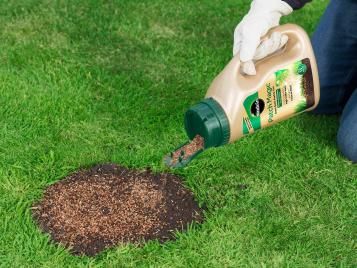
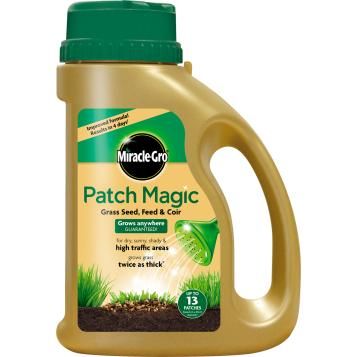
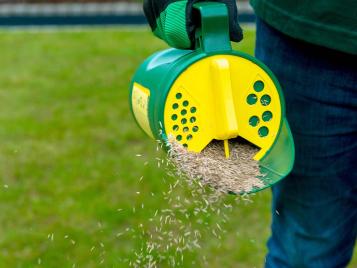
Small patches such as these are best treated by a special lawn patch repair kit such as Miracle-Gro® Patch Magic® Grass Seed, Feed & Coir. This product is guaranteed to grow anywhere and is specially formulated to germinate quickly, filling in those bare patches rapidly and thickly.
Drought
If you have large, widespread patches of discoloured, damaged or absent grass, it may be the result of a particularly hot, dry period. This is typically easily prevented by watering your lawn on a regular basis and making sure the soil remains moist.
If it’s too late to salvage your lawn, you should re-seed the area using a drought tolerant seed.
Frequently asked questions
What is the best way to repair a grass patch?
The best way to fix patchy grass is to identify what’s causing the issue, and re-seed the area with an appropriate grass seed that’s resilient to the conditions that are causing bare spots in your lawn. You may have limited success with a multipurpose seed, but it’s much more effective to choose an appropriate seed and understanding what’s causing your patches may allow you to prevent them in future. You do not need to re-seed your entire lawn!
When is the best time to repair lawn patches?
The best times to repair grass patches in the UK are Autumn and Spring. Grass germinates best between temperatures of 10 and 16 degrees Celsius, and in moist conditions. Chances are you’re likely to have sown your grass seed in Autumn, as this is generally considered the most optimal time of year to seed your lawn. You will therefore likely find March, April and May an ideal time to repair your bald spots, so that your lawn is looking illustrious in time for summer. Early Autumn is also optimal for repairs.