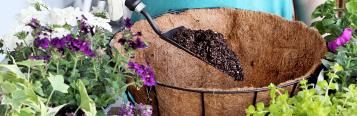
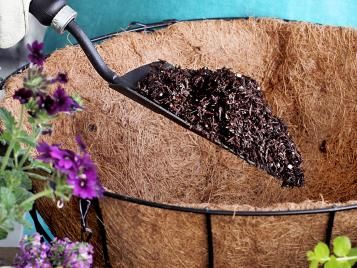
A trowel of soil being put into a hanging basket.

Beginner’s Guide to Hanging Baskets

Hanging baskets make for a stunning display

Flowering hanging baskets are a fantastic way to add plants to even the smallest spaces. Hung from hooks or in wall hanging planters, they can bring colour to a patio or balcony, create atmosphere for a seating area or brighten up a dull doorway. With so many gorgeous hanging basket plants to choose from, you can light up shady spots or add vibrant colour to sunny areas – the opportunities are endless! Our comprehensive guide will show you how to plant hanging baskets and keep them looking great.

Author

Kate Turner

Horticulturalist

Planting up a hanging basket for summer

Tips on choosing hanging basket plants

When you’re choosing outdoor hanging basket plants, look for plants with long flowering periods or interesting foliage that will look good for several months. Think about texture, contrasting bold flowers and foliage with frothier ‘filler’ plants. Most importantly, use plenty of trailing plants to take full advantage of the additional vertical planting space that hanging baskets give you. 

For maximum impact, plants in hanging baskets are usually planted close together so that the baskets look full right from the start of the season. This does mean that you’ll need to feed and water them regularly but ensures that your hanging baskets are filled with flowers.

Best plants for summer hanging baskets

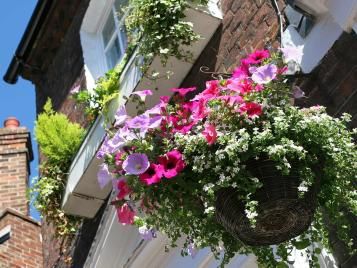
With so many beautiful long-flowering plants available for summer hanging baskets, it’s hard to know which ones to choose! Plants like trailing petunias, begonias and geraniums will flower for months in summer, and fillers like lobelia and bacopa provide an extra soft froth of flowers. Here are a few ideas for summer hanging baskets.

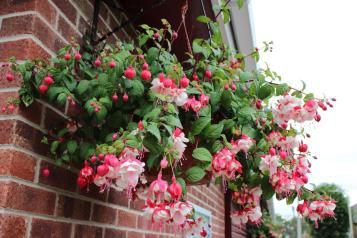
  • Hanging baskets filled with trailing pink and white fuchsias

Best plants for winter hanging baskets

Although fewer plants are in bloom in winter, you can still plant flowering hanging baskets to enjoy colour throughout the winter months and into early spring. Small evergreens with red berries add seasonal cheer and plants like heucheras with colourful foliage look good even in the depths of winter. You can even include flowering plants, such as violas, hellebores and winter-flowering heathers, and pop in a few small spring-flowering crocus and daffodil bulbs to give your baskets spring interest.

Here are a few winter hanging basket ideas to inspire you.

  • Cordyline
  • Skimmia japonica
  • Winter-flowering heathers
  • Heucheras
  • Ivy
  • Hellebores
  • Violas
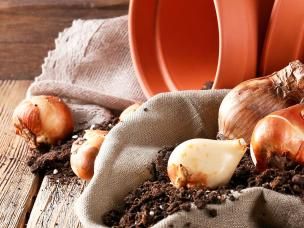
  • Crocus bulbs
  • Narcissus (Narcissus ‘Tete a Tete’, ‘Pipit’ and ‘Minnow’ are all small daffodil varieties ideal for hanging baskets)

Planting fruit and vegetables in hanging baskets

If you’re after something a bit different for your hanging baskets, why not add in some fruit, flowering herbs, or even vegetables? Here are a few to try:

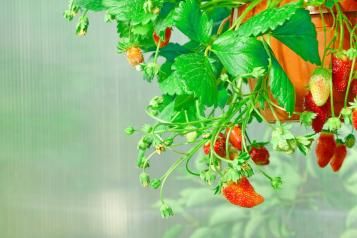
  • Strawberries (look for everbearing varieties that give you flowers and fruit all summer, or combine different varieties for a long picking season) 
  • Tomatoes (choose bush tomatoes, also called determinate tomatoes, like ‘Tumbling Tom’, which will trail over the edge of a hanging basket)
  • Basil
  • Thyme
  • Chives

Close-up of strawberry plant trailing from hanging planter

When to plant hanging baskets

You can start planting up summer hanging baskets from April but keep the finished baskets in a greenhouse or other protected environment until all risk of frost is past. Before hanging your baskets, harden the plants off for a week or two by leaving the planted-up baskets outside during the day and bringing them back indoors overnight. Plant up winter baskets between September and November.

How to plant a hanging basket

Close-up of gardener’s hand using trowel to fill hanging basket with compost.

  1. Your hanging basket will need to be lined to retain the compost. Some hanging baskets come with plastic or coir liners already included. If your hanging basket is lined with plastic, check that there are holes in the liner to allow water to drain out. If not, carefully use a knife or pair of scissors to slice a few drainage holes in the liner. 
  2. If your hanging basket is not lined, you can either buy a coir liner to fit it, or simply cut your own plastic liner out of an old compost bag. Avoid buying sphagnum moss to use as liner material unless you are sure it has been harvested from a sustainable source.
  3. Place the liner in the hanging basket. For an extra-abundant effect, cut a few holes in the liner about half-way up the sides of the basket, so that you can insert plants into these holes.
  4. Place a saucer in the base of the hanging basket. This will act as a small reservoir for water, giving the compost more time to absorb it before it drains out of the basket and reducing the amount of nutrients washed out of the compost. 
  5. Add an all-purpose compost to the hanging basket to just below the level of the holes cut through the sides. To reduce watering, you can either mix water retaining crystals into the compost before planting, or use a moisture retaining compost like Miracle-Gro Peat-Free Premium Moisture Control Compost for Pots and Baskets. This is specially formulated to retain moisture, allowing plants to stay hydrated for longer between waterings, and provides enough nutrients to feed plants for 3 months.
  6. Remove the plants from their pots or trays. If you are planting through the sides of the hanging baskets, first wrap the plants’ rootballs in newspaper to protect them during the planting process. Push the rootballs through the holes, then cover them with compost. The newspaper can be left on the roots and will gradually break down in the compost.
  7. Place plants in the top of the basket and fill around them with compost, making sure there are no air gaps around plant root balls. 
  8. Firm the compost gently. Water the hanging baskets and leave them to drain. This allows the compost to settle.
  9. If frost is still a risk, place the baskets in a greenhouse, cold frame or indoors until it is warm enough to hang them outside.
  10. Safety tip: Remember that hanging baskets filled with compost and plants are heavy when wet, so make sure the hooks they are hung from are securely fixed and strong enough to cope with the weight.

Tips on caring for outdoor hanging baskets

  • Water outdoor hanging planters regularly, especially in dry periods. The simplest way to check whether they need water is to lift them gently from underneath to see how heavy they are. If they feel very light, they probably need to be watered.
  • To save water and reduce the amount of nutrients washed out of the compost, place a bucket on the ground below your hanging baskets when watering them. Once the baskets have drained, gently tip this water back into them, giving the compost a second chance to absorb it. 
  • Because hanging baskets are compact and crammed with flowering plants, they need a lot of food to keep them looking good. Feed your plants fortnightly with a liquid plant food diluted in a watering can. Always water the baskets before feeding, as applying liquid food to dry compost can damage plant roots.
  • Deadhead faded flowers regularly. This encourages the plants to produce more flowers, keeping your hanging baskets looking good for longer.
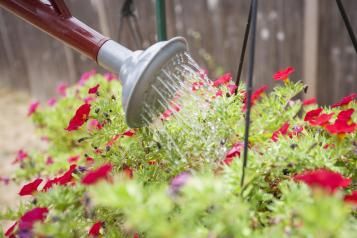
Close-up of a watering can watering a hanging basket filled with red flowers.

How to care for winter hanging baskets

Winter hanging baskets have to cope with tough weather conditions, so they need to be treated differently to summer hanging baskets. Here are our top tips on caring for winter hanging baskets:

  • Choose hardy plants that will cope with winter frosts.
  • Place the baskets in a sheltered position that gets as much sun as possible.
  • Winter hanging baskets won’t need watering as often as summer baskets, but check them periodically, especially if they are positioned in a spot that is sheltered from rain, for example next to a doorway or under a porch. Water as needed to stop the compost drying out.
  • Don’t feed winter hanging baskets, as this can encourage new growth which is likely to be damaged by frosts. As plants grow more slowly and flower less in winter, a good all-purpose compost will contain enough nutrients to see them through the winter months.


Indoor hanging planters

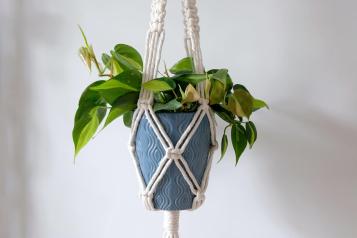
Indoor plant in blue pot hung using macrame string hanger

Indoor plants can transform a room by bringing the outdoors inside, and studies have shown they’re great for our mental health too! If you’ve run out of shelf space for all your house plants, indoor hanging planters are the ideal solution. When planting indoor hanging planters you’ll need to consider three key points:

  • How much light your plants will need
  • Which containers to use
  • How to water your plants

Best light for indoor hanging plants

Most indoor plants prefer bright, indirect light but some, such as ferns, aspidistras and peace lilies, can cope with more shade, so when you are deciding where to position your hanging planters, think about what you plan to plant in them and check that the light levels will suit them.

Choosing containers for indoor hanging plants

When choosing your planters, check how much the container will weigh once filled with wet compost and plants, and make sure all hooks are securely fixed and able to take the weight. You don’t want your plants to end up on the floor! If weight is a problem, choose plastic containers, which are lighter than ceramic versions. You can also mix perlite with compost to reduce its weight, although this may mean you need to water more frequently as the perlite will cause the compost to drain faster. 

How to water indoor hanging planters

Watering indoor hanging plants poses two main challenges; reaching the plants to water them, and allowing them to drain without dripping all over your floor.  Some indoor planters have built-in drip trays to catch the water that drains from pots when they are watered. Alternatively, you can place your indoor plant pots inside an outer pot to catch the drips. To avoid root rot, water sparingly, so that your plants don’t end up sitting in sodden compost for long periods. Use a long-necked watering can and a portable step to reach high-up hanging planters.
 

FAQs

What flowers are best for hanging baskets?

Trailing plants like trailing petunias look beautiful in hanging baskets, making good use of the additional vertical planting space. Plants that flower for a long period in summer, like varieties of trailing geraniums, fuchsias and trailing begonias are also a popular choice. For winter hanging baskets, choose hardy plants like hellebores, heathers and violas that can cope with frost.

Find your local store

Looking for specialised gardening advice? Or just hunting for a specific product? Visit your local store and get help from dedicated staff.